
Specification · Superseded
Open Model Context Protocol
Version 2025-06-18
1 Specification
Model Context Protocol (MCP) is an open protocol that enables seamless integration between LLM applications and external data sources and tools. Whether you're building an AI-powered IDE, enhancing a chat interface, or creating custom AI workflows, MCP provides a standardized way to connect LLMs with the context they need.
This specification defines the authoritative protocol requirements, based on the TypeScript schema in schema.ts.
For implementation guides and examples, visit openmodelcontextprotocol.org.
The key words "MUST", "MUST NOT", "REQUIRED", "SHALL", "SHALL NOT", "SHOULD", "SHOULD NOT", "RECOMMENDED", "NOT RECOMMENDED", "MAY", and "OPTIONAL" in this document are to be interpreted as described in BCP 14 [RFC2119] [RFC8174] when, and only when, they appear in all capitals, as shown here.
Overview
MCP provides a standardized way for applications to:
- Share contextual information with language models
- Expose tools and capabilities to AI systems
- Build composable integrations and workflows
The protocol uses JSON-RPC 2.0 messages to establish communication between:
- Hosts: LLM applications that initiate connections
- Clients: Connectors within the host application
- Servers: Services that provide context and capabilities
MCP takes some inspiration from the Language Server Protocol, which standardizes how to add support for programming languages across a whole ecosystem of development tools. In a similar way, MCP standardizes how to integrate additional context and tools into the ecosystem of AI applications.
Key Details
Base Protocol
- JSON-RPC message format
- Stateful connections
- Server and client capability negotiation
Features
Servers offer any of the following features to clients:
- Resources: Context and data, for the user or the AI model to use
- Prompts: Templated messages and workflows for users
- Tools: Functions for the AI model to execute
Clients may offer the following features to servers:
- Sampling: Server-initiated agentic behaviors and recursive LLM interactions
- Roots: Server-initiated inquiries into uri or filesystem boundaries to operate in
- Elicitation: Server-initiated requests for additional information from users
Additional Utilities
- Configuration
- Progress tracking
- Cancellation
- Error reporting
- Logging
Security and Trust & Safety
The Model Context Protocol enables powerful capabilities through arbitrary data access and code execution paths. With this power comes important security and trust considerations that all implementors must carefully address.
Key Principles
-
User Consent and Control
- Users must explicitly consent to and understand all data access and operations
- Users must retain control over what data is shared and what actions are taken
- Implementors should provide clear UIs for reviewing and authorizing activities
-
Data Privacy
- Hosts must obtain explicit user consent before exposing user data to servers
- Hosts must not transmit resource data elsewhere without user consent
- User data should be protected with appropriate access controls
-
Tool Safety
- Tools represent arbitrary code execution and must be treated with appropriate
caution.
- In particular, descriptions of tool behavior such as annotations should be considered untrusted, unless obtained from a trusted server.
- Hosts must obtain explicit user consent before invoking any tool
- Users should understand what each tool does before authorizing its use
- Tools represent arbitrary code execution and must be treated with appropriate
caution.
-
LLM Sampling Controls
- Users must explicitly approve any LLM sampling requests
- Users should control:
- Whether sampling occurs at all
- The actual prompt that will be sent
- What results the server can see
- The protocol intentionally limits server visibility into prompts
Implementation Guidelines
While MCP itself cannot enforce these security principles at the protocol level, implementors SHOULD:
- Build robust consent and authorization flows into their applications
- Provide clear documentation of security implications
- Implement appropriate access controls and data protections
- Follow security best practices in their integrations
- Consider privacy implications in their feature designs
Learn More
Explore the detailed specification for each protocol component:
2 Key Changes
This document lists changes made to the Model Context Protocol (MCP) specification since the previous revision, 2025-03-26.
Major changes
- Remove support for JSON-RPC batching (PR #416)
- Add support for structured tool output (PR #371)
- Classify MCP servers as OAuth Resource Servers, adding protected resource metadata to discover the corresponding Authorization server. (PR #338)
- Require MCP clients to implement Resource Indicators as described in RFC 8707 to prevent malicious servers from obtaining access tokens. (PR #734)
- Clarify security considerations and best practices in the authorization spec and in a new security best practices page.
- Add support for elicitation, enabling servers to request additional information from users during interactions. (PR #382)
- Add support for resource links in tool call results. (PR #603)
- Require negotiated protocol version to be specified
via
MCP-Protocol-Versionheader in subsequent requests when using HTTP (PR #548). - Change SHOULD to MUST in Lifecycle Operation
Other schema changes
- Add
_metafield to additional interface types (PR #710), and specify proper usage. - Add
contextfield toCompletionRequest, providing for completion requests to include previously-resolved variables (PR #598). - Add
titlefield for human-friendly display names, so thatnamecan be used as a programmatic identifier (PR #663)
Full changelog
For a complete list of all changes that have been made since the last protocol revision, see GitHub.
3 Architecture
The Model Context Protocol (MCP) follows a client-host-server architecture where each host can run multiple client instances. This architecture enables users to integrate AI capabilities across applications while maintaining clear security boundaries and isolating concerns. Built on JSON-RPC, MCP provides a stateful session protocol focused on context exchange and sampling coordination between clients and servers.
Core Components
Host
The host process acts as the container and coordinator:
- Creates and manages multiple client instances
- Controls client connection permissions and lifecycle
- Enforces security policies and consent requirements
- Handles user authorization decisions
- Coordinates AI/LLM integration and sampling
- Manages context aggregation across clients
Clients
Each client is created by the host and maintains an isolated server connection:
- Establishes one stateful session per server
- Handles protocol negotiation and capability exchange
- Routes protocol messages bidirectionally
- Manages subscriptions and notifications
- Maintains security boundaries between servers
A host application creates and manages multiple clients, with each client having a 1:1 relationship with a particular server.
Servers
Servers provide specialized context and capabilities:
- Expose resources, tools and prompts via MCP primitives
- Operate independently with focused responsibilities
- Request sampling through client interfaces
- Must respect security constraints
- Can be local processes or remote services
Design Principles
MCP is built on several key design principles that inform its architecture and implementation:
-
Servers should be extremely easy to build
- Host applications handle complex orchestration responsibilities
- Servers focus on specific, well-defined capabilities
- Simple interfaces minimize implementation overhead
- Clear separation enables maintainable code
-
Servers should be highly composable
- Each server provides focused functionality in isolation
- Multiple servers can be combined seamlessly
- Shared protocol enables interoperability
- Modular design supports extensibility
-
Servers should not be able to read the whole conversation, nor "see into" other servers
- Servers receive only necessary contextual information
- Full conversation history stays with the host
- Each server connection maintains isolation
- Cross-server interactions are controlled by the host
- Host process enforces security boundaries
-
Features can be added to servers and clients progressively
- Core protocol provides minimal required functionality
- Additional capabilities can be negotiated as needed
- Servers and clients evolve independently
- Protocol designed for future extensibility
- Backwards compatibility is maintained
Capability Negotiation
The Model Context Protocol uses a capability-based negotiation system where clients and servers explicitly declare their supported features during initialization. Capabilities determine which protocol features and primitives are available during a session.
- Servers declare capabilities like resource subscriptions, tool support, and prompt templates
- Clients declare capabilities like sampling support and notification handling
- Both parties must respect declared capabilities throughout the session
- Additional capabilities can be negotiated through extensions to the protocol
Each capability unlocks specific protocol features for use during the session. For example:
- Implemented server features must be advertised in the server's capabilities
- Emitting resource subscription notifications requires the server to declare subscription support
- Tool invocation requires the server to declare tool capabilities
- Sampling requires the client to declare support in its capabilities
This capability negotiation ensures clients and servers have a clear understanding of supported functionality while maintaining protocol extensibility.
4 Base Protocol
4.1 Overview
The Model Context Protocol consists of several key components that work together:
- Base Protocol: Core JSON-RPC message types
- Lifecycle Management: Connection initialization, capability negotiation, and session control
- Authorization: Authentication and authorization framework for HTTP-based transports
- Server Features: Resources, prompts, and tools exposed by servers
- Client Features: Sampling and root directory lists provided by clients
- Utilities: Cross-cutting concerns like logging and argument completion
All implementations MUST support the base protocol and lifecycle management components. Other components MAY be implemented based on the specific needs of the application.
These protocol layers establish clear separation of concerns while enabling rich interactions between clients and servers. The modular design allows implementations to support exactly the features they need.
Messages
All messages between MCP clients and servers MUST follow the JSON-RPC 2.0 specification. The protocol defines these types of messages:
Requests
Requests are sent from the client to the server or vice versa, to initiate an operation.
{
  jsonrpc: "2.0";
  id: string | number;
  method: string;
  params?: {
    [key: string]: unknown;
  };
}
- Requests MUST include a string or integer ID.
- Unlike base JSON-RPC, the ID MUST NOT be
null. - The request ID MUST NOT have been previously used by the requestor within the same session.
Responses
Responses are sent in reply to requests, containing the result or error of the operation.
{
  jsonrpc: "2.0";
  id: string | number;
  result?: {
    [key: string]: unknown;
  }
  error?: {
    code: number;
    message: string;
    data?: unknown;
  }
}
- Responses MUST include the same ID as the request they correspond to.
- Responses are further sub-categorized as either successful results or
errors. Either a
resultor anerrorMUST be set. A response MUST NOT set both. - Results MAY follow any JSON object structure, while errors MUST include an error code and message at minimum.
- Error codes MUST be integers.
Notifications
Notifications are sent from the client to the server or vice versa, as a one-way message. The receiver MUST NOT send a response.
{
  jsonrpc: "2.0";
  method: string;
  params?: {
    [key: string]: unknown;
  };
}
- Notifications MUST NOT include an ID.
Auth
MCP provides an Authorization framework for use with HTTP. Implementations using an HTTP-based transport SHOULD conform to this specification, whereas implementations using STDIO transport SHOULD NOT follow this specification, and instead retrieve credentials from the environment.
Additionally, clients and servers MAY negotiate their own custom authentication and authorization strategies.
For further discussions and contributions to the evolution of MCP’s auth mechanisms, join us in GitHub Discussions to help shape the future of the protocol!
Schema
The full specification of the protocol is defined as a TypeScript schema. This is the source of truth for all protocol messages and structures.
There is also a JSON Schema, which is automatically generated from the TypeScript source of truth, for use with various automated tooling.
General fields
_meta
The _meta property/parameter is reserved by MCP to allow clients and servers
to attach additional metadata to their interactions.
Certain key names are reserved by MCP for protocol-level metadata, as specified below; implementations MUST NOT make assumptions about values at these keys.
Additionally, definitions in the schema may reserve particular names for purpose-specific metadata, as declared in those definitions.
Key name format: valid _meta key names have two segments: an optional prefix, and a name.
Prefix:
- If specified, MUST be a series of labels separated by dots (
.), followed by a slash (/).- Labels MUST start with a letter and end with a letter or digit; interior characters can be letters, digits, or hyphens (
-).
- Labels MUST start with a letter and end with a letter or digit; interior characters can be letters, digits, or hyphens (
- Any prefix beginning with zero or more valid labels, followed by
modelcontextprotocolormcp, followed by any valid label, is reserved for MCP use.- For example:
modelcontextprotocol.io/,mcp.dev/,api.modelcontextprotocol.org/, andtools.mcp.com/are all reserved.
- For example:
Name:
- Unless empty, MUST begin and end with an alphanumeric character (
[a-z0-9A-Z]). - MAY contain hyphens (
-), underscores (_), dots (.), and alphanumerics in between.
4.2 Lifecycle
The Model Context Protocol (MCP) defines a rigorous lifecycle for client-server connections that ensures proper capability negotiation and state management.
- Initialization: Capability negotiation and protocol version agreement
- Operation: Normal protocol communication
- Shutdown: Graceful termination of the connection
Lifecycle Phases
Initialization
The initialization phase MUST be the first interaction between client and server. During this phase, the client and server:
- Establish protocol version compatibility
- Exchange and negotiate capabilities
- Share implementation details
The client MUST initiate this phase by sending an initialize request containing:
- Protocol version supported
- Client capabilities
- Client implementation information
{
  "jsonrpc": "2.0",
  "id": 1,
  "method": "initialize",
  "params": {
    "protocolVersion": "2025-06-18",
    "capabilities": {
      "roots": {
        "listChanged": true
      },
      "sampling": {},
      "elicitation": {}
    },
    "clientInfo": {
      "name": "ExampleClient",
      "title": "Example Client Display Name",
      "version": "1.0.0"
    }
  }
}
The server MUST respond with its own capabilities and information:
{
  "jsonrpc": "2.0",
  "id": 1,
  "result": {
    "protocolVersion": "2025-06-18",
    "capabilities": {
      "logging": {},
      "prompts": {
        "listChanged": true
      },
      "resources": {
        "subscribe": true,
        "listChanged": true
      },
      "tools": {
        "listChanged": true
      }
    },
    "serverInfo": {
      "name": "ExampleServer",
      "title": "Example Server Display Name",
      "version": "1.0.0"
    },
    "instructions": "Optional instructions for the client"
  }
}
After successful initialization, the client MUST send an initialized notification
to indicate it is ready to begin normal operations:
{
  "jsonrpc": "2.0",
  "method": "notifications/initialized"
}
- The client SHOULD NOT send requests other than
pings before the server has responded to the
initializerequest. - The server SHOULD NOT send requests other than
pings and
logging before receiving the
initializednotification.
Version Negotiation
In the initialize request, the client MUST send a protocol version it supports.
This SHOULD be the latest version supported by the client.
If the server supports the requested protocol version, it MUST respond with the same version. Otherwise, the server MUST respond with another protocol version it supports. This SHOULD be the latest version supported by the server.
If the client does not support the version in the server's response, it SHOULD disconnect.
Capability Negotiation
Client and server capabilities establish which optional protocol features will be available during the session.
Key capabilities include:
| Category | Capability | Description |
|---|---|---|
| Client | roots |
Ability to provide filesystem roots |
| Client | sampling |
Support for LLM sampling requests |
| Client | elicitation |
Support for server elicitation requests |
| Client | experimental |
Describes support for non-standard experimental features |
| Server | prompts |
Offers prompt templates |
| Server | resources |
Provides readable resources |
| Server | tools |
Exposes callable tools |
| Server | logging |
Emits structured log messages |
| Server | completions |
Supports argument autocompletion |
| Server | experimental |
Describes support for non-standard experimental features |
Capability objects can describe sub-capabilities like:
listChanged: Support for list change notifications (for prompts, resources, and tools)subscribe: Support for subscribing to individual items' changes (resources only)
Operation
During the operation phase, the client and server exchange messages according to the negotiated capabilities.
Both parties MUST:
- Respect the negotiated protocol version
- Only use capabilities that were successfully negotiated
Shutdown
During the shutdown phase, one side (usually the client) cleanly terminates the protocol connection. No specific shutdown messages are defined—instead, the underlying transport mechanism should be used to signal connection termination:
stdio
For the stdio transport, the client SHOULD initiate shutdown by:
- First, closing the input stream to the child process (the server)
- Waiting for the server to exit, or sending
SIGTERMif the server does not exit within a reasonable time - Sending
SIGKILLif the server does not exit within a reasonable time afterSIGTERM
The server MAY initiate shutdown by closing its output stream to the client and exiting.
HTTP
For HTTP transports, shutdown is indicated by closing the associated HTTP connection(s).
Timeouts
Implementations SHOULD establish timeouts for all sent requests, to prevent hung connections and resource exhaustion. When the request has not received a success or error response within the timeout period, the sender SHOULD issue a cancellation notification for that request and stop waiting for a response.
SDKs and other middleware SHOULD allow these timeouts to be configured on a per-request basis.
Implementations MAY choose to reset the timeout clock when receiving a progress notification corresponding to the request, as this implies that work is actually happening. However, implementations SHOULD always enforce a maximum timeout, regardless of progress notifications, to limit the impact of a misbehaving client or server.
Error Handling
Implementations SHOULD be prepared to handle these error cases:
- Protocol version mismatch
- Failure to negotiate required capabilities
- Request timeouts
Example initialization error:
{
  "jsonrpc": "2.0",
  "id": 1,
  "error": {
    "code": -32602,
    "message": "Unsupported protocol version",
    "data": {
      "supported": ["2024-11-05"],
      "requested": "1.0.0"
    }
  }
}
4.3 Transports
MCP uses JSON-RPC to encode messages. JSON-RPC messages MUST be UTF-8 encoded.
The protocol currently defines two standard transport mechanisms for client-server communication:
- stdio, communication over standard in and standard out
- Streamable HTTP
Clients SHOULD support stdio whenever possible.
It is also possible for clients and servers to implement custom transports in a pluggable fashion.
stdio
In the stdio transport:
- The client launches the MCP server as a subprocess.
- The server reads JSON-RPC messages from its standard input (
stdin) and sends messages to its standard output (stdout). - Messages are individual JSON-RPC requests, notifications, or responses.
- Messages are delimited by newlines, and MUST NOT contain embedded newlines.
- The server MAY write UTF-8 strings to its standard error (
stderr) for logging purposes. Clients MAY capture, forward, or ignore this logging. - The server MUST NOT write anything to its
stdoutthat is not a valid MCP message. - The client MUST NOT write anything to the server's
stdinthat is not a valid MCP message.
Streamable HTTP
In the Streamable HTTP transport, the server operates as an independent process that can handle multiple client connections. This transport uses HTTP POST and GET requests. Server can optionally make use of Server-Sent Events (SSE) to stream multiple server messages. This permits basic MCP servers, as well as more feature-rich servers supporting streaming and server-to-client notifications and requests.
The server MUST provide a single HTTP endpoint path (hereafter referred to as the
MCP endpoint) that supports both POST and GET methods. For example, this could be a
URL like https://example.com/mcp.
Security Warning
When implementing Streamable HTTP transport:
- Servers MUST validate the
Originheader on all incoming connections to prevent DNS rebinding attacks - When running locally, servers SHOULD bind only to localhost (127.0.0.1) rather than all network interfaces (0.0.0.0)
- Servers SHOULD implement proper authentication for all connections
Without these protections, attackers could use DNS rebinding to interact with local MCP servers from remote websites.
Sending Messages to the Server
Every JSON-RPC message sent from the client MUST be a new HTTP POST request to the MCP endpoint.
- The client MUST use HTTP POST to send JSON-RPC messages to the MCP endpoint.
- The client MUST include an
Acceptheader, listing bothapplication/jsonandtext/event-streamas supported content types. - The body of the POST request MUST be a single JSON-RPC request, notification, or response.
- If the input is a JSON-RPC response or notification:
- If the server accepts the input, the server MUST return HTTP status code 202 Accepted with no body.
- If the server cannot accept the input, it MUST return an HTTP error status code
(e.g., 400 Bad Request). The HTTP response body MAY comprise a JSON-RPC error
response that has no
id.
- If the input is a JSON-RPC request, the server MUST either
return
Content-Type: text/event-stream, to initiate an SSE stream, orContent-Type: application/json, to return one JSON object. The client MUST support both these cases. - If the server initiates an SSE stream:
- The SSE stream SHOULD eventually include JSON-RPC response for the JSON-RPC request sent in the POST body.
- The server MAY send JSON-RPC requests and notifications before sending the JSON-RPC response. These messages SHOULD relate to the originating client request.
- The server SHOULD NOT close the SSE stream before sending the JSON-RPC response for the received JSON-RPC request, unless the session expires.
- After the JSON-RPC response has been sent, the server SHOULD close the SSE stream.
- Disconnection MAY occur at any time (e.g., due to network conditions).
Therefore:
- Disconnection SHOULD NOT be interpreted as the client cancelling its request.
- To cancel, the client SHOULD explicitly send an MCP
CancelledNotification. - To avoid message loss due to disconnection, the server MAY make the stream resumable.
Listening for Messages from the Server
- The client MAY issue an HTTP GET to the MCP endpoint. This can be used to open an SSE stream, allowing the server to communicate to the client, without the client first sending data via HTTP POST.
- The client MUST include an
Acceptheader, listingtext/event-streamas a supported content type. - The server MUST either return
Content-Type: text/event-streamin response to this HTTP GET, or else return HTTP 405 Method Not Allowed, indicating that the server does not offer an SSE stream at this endpoint. - If the server initiates an SSE stream:
- The server MAY send JSON-RPC requests and notifications on the stream.
- These messages SHOULD be unrelated to any concurrently-running JSON-RPC request from the client.
- The server MUST NOT send a JSON-RPC response on the stream unless resuming a stream associated with a previous client request.
- The server MAY close the SSE stream at any time.
- The client MAY close the SSE stream at any time.
Multiple Connections
- The client MAY remain connected to multiple SSE streams simultaneously.
- The server MUST send each of its JSON-RPC messages on only one of the connected
streams; that is, it MUST NOT broadcast the same message across multiple streams.
- The risk of message loss MAY be mitigated by making the stream resumable.
Resumability and Redelivery
To support resuming broken connections, and redelivering messages that might otherwise be lost:
- Servers MAY attach an
idfield to their SSE events, as described in the SSE standard.- If present, the ID MUST be globally unique across all streams within that session—or all streams with that specific client, if session management is not in use.
- If the client wishes to resume after a broken connection, it SHOULD issue an HTTP
GET to the MCP endpoint, and include the
Last-Event-IDheader to indicate the last event ID it received.- The server MAY use this header to replay messages that would have been sent after the last event ID, on the stream that was disconnected, and to resume the stream from that point.
- The server MUST NOT replay messages that would have been delivered on a different stream.
In other words, these event IDs should be assigned by servers on a per-stream basis, to act as a cursor within that particular stream.
Session Management
An MCP "session" consists of logically related interactions between a client and a server, beginning with the initialization phase. To support servers which want to establish stateful sessions:
- A server using the Streamable HTTP transport MAY assign a session ID at
initialization time, by including it in an
Mcp-Session-Idheader on the HTTP response containing theInitializeResult.- The session ID SHOULD be globally unique and cryptographically secure (e.g., a securely generated UUID, a JWT, or a cryptographic hash).
- The session ID MUST only contain visible ASCII characters (ranging from 0x21 to 0x7E).
- If an
Mcp-Session-Idis returned by the server during initialization, clients using the Streamable HTTP transport MUST include it in theMcp-Session-Idheader on all of their subsequent HTTP requests.- Servers that require a session ID SHOULD respond to requests without an
Mcp-Session-Idheader (other than initialization) with HTTP 400 Bad Request.
- Servers that require a session ID SHOULD respond to requests without an
- The server MAY terminate the session at any time, after which it MUST respond to requests containing that session ID with HTTP 404 Not Found.
- When a client receives HTTP 404 in response to a request containing an
Mcp-Session-Id, it MUST start a new session by sending a newInitializeRequestwithout a session ID attached. - Clients that no longer need a particular session (e.g., because the user is leaving
the client application) SHOULD send an HTTP DELETE to the MCP endpoint with the
Mcp-Session-Idheader, to explicitly terminate the session.- The server MAY respond to this request with HTTP 405 Method Not Allowed, indicating that the server does not allow clients to terminate sessions.
Sequence Diagram
Protocol Version Header
If using HTTP, the client MUST include the MCP-Protocol-Version: <protocol-version> HTTP header on all subsequent requests to the MCP
server, allowing the MCP server to respond based on the MCP protocol version.
For example: MCP-Protocol-Version: 2025-06-18
The protocol version sent by the client SHOULD be the one negotiated during initialization.
For backwards compatibility, if the server does not receive an MCP-Protocol-Version
header, and has no other way to identify the version - for example, by relying on the
protocol version negotiated during initialization - the server SHOULD assume protocol
version 2025-03-26.
If the server receives a request with an invalid or unsupported
MCP-Protocol-Version, it MUST respond with 400 Bad Request.
Backwards Compatibility
Clients and servers can maintain backwards compatibility with the deprecated HTTP+SSE transport (from protocol version 2024-11-05) as follows:
Servers wanting to support older clients should:
- Continue to host both the SSE and POST endpoints of the old transport, alongside the
new "MCP endpoint" defined for the Streamable HTTP transport.
- It is also possible to combine the old POST endpoint and the new MCP endpoint, but this may introduce unneeded complexity.
Clients wanting to support older servers should:
- Accept an MCP server URL from the user, which may point to either a server using the old transport or the new transport.
- Attempt to POST an
InitializeRequestto the server URL, with anAcceptheader as defined above:- If it succeeds, the client can assume this is a server supporting the new Streamable HTTP transport.
- If it fails with an HTTP 4xx status code (e.g., 405 Method Not Allowed or 404 Not
Found):
- Issue a GET request to the server URL, expecting that this will open an SSE stream
and return an
endpointevent as the first event. - When the
endpointevent arrives, the client can assume this is a server running the old HTTP+SSE transport, and should use that transport for all subsequent communication.
- Issue a GET request to the server URL, expecting that this will open an SSE stream
and return an
Custom Transports
Clients and servers MAY implement additional custom transport mechanisms to suit their specific needs. The protocol is transport-agnostic and can be implemented over any communication channel that supports bidirectional message exchange.
Implementers who choose to support custom transports MUST ensure they preserve the JSON-RPC message format and lifecycle requirements defined by MCP. Custom transports SHOULD document their specific connection establishment and message exchange patterns to aid interoperability.
4.4 Authorization
Introduction
Purpose and Scope
The Model Context Protocol provides authorization capabilities at the transport level, enabling MCP clients to make requests to restricted MCP servers on behalf of resource owners. This specification defines the authorization flow for HTTP-based transports.
Protocol Requirements
Authorization is OPTIONAL for MCP implementations. When supported:
- Implementations using an HTTP-based transport SHOULD conform to this specification.
- Implementations using an STDIO transport SHOULD NOT follow this specification, and instead retrieve credentials from the environment.
- Implementations using alternative transports MUST follow established security best practices for their protocol.
Standards Compliance
This authorization mechanism is based on established specifications listed below, but implements a selected subset of their features to ensure security and interoperability while maintaining simplicity:
- OAuth 2.1 IETF DRAFT (draft-ietf-oauth-v2-1-13)
- OAuth 2.0 Authorization Server Metadata (RFC8414)
- OAuth 2.0 Dynamic Client Registration Protocol (RFC7591)
- OAuth 2.0 Protected Resource Metadata (RFC9728)
Authorization Flow
Roles
A protected MCP server acts as an OAuth 2.1 resource server, capable of accepting and responding to protected resource requests using access tokens.
An MCP client acts as an OAuth 2.1 client, making protected resource requests on behalf of a resource owner.
The authorization server is responsible for interacting with the user (if necessary) and issuing access tokens for use at the MCP server. The implementation details of the authorization server are beyond the scope of this specification. It may be hosted with the resource server or a separate entity. The Authorization Server Discovery section specifies how an MCP server indicates the location of its corresponding authorization server to a client.
Overview
-
Authorization servers MUST implement OAuth 2.1 with appropriate security measures for both confidential and public clients.
-
Authorization servers and MCP clients SHOULD support the OAuth 2.0 Dynamic Client Registration Protocol (RFC7591).
-
MCP servers MUST implement OAuth 2.0 Protected Resource Metadata (RFC9728). MCP clients MUST use OAuth 2.0 Protected Resource Metadata for authorization server discovery.
-
Authorization servers MUST provide OAuth 2.0 Authorization Server Metadata (RFC8414). MCP clients MUST use the OAuth 2.0 Authorization Server Metadata.
Authorization Server Discovery
This section describes the mechanisms by which MCP servers advertise their associated authorization servers to MCP clients, as well as the discovery process through which MCP clients can determine authorization server endpoints and supported capabilities.
Authorization Server Location
MCP servers MUST implement the OAuth 2.0 Protected Resource Metadata (RFC9728)
specification to indicate the locations of authorization servers. The Protected Resource Metadata document returned by the MCP server MUST include
the authorization_servers field containing at least one authorization server.
The specific use of authorization_servers is beyond the scope of this specification; implementers should consult
OAuth 2.0 Protected Resource Metadata (RFC9728) for
guidance on implementation details.
Implementors should note that Protected Resource Metadata documents can define multiple authorization servers. The responsibility for selecting which authorization server to use lies with the MCP client, following the guidelines specified in RFC9728 Section 7.6 "Authorization Servers".
MCP servers MUST use the HTTP header WWW-Authenticate when returning a 401 Unauthorized to indicate the location of the resource server metadata URL
as described in RFC9728 Section 5.1 "WWW-Authenticate Response".
MCP clients MUST be able to parse WWW-Authenticate headers and respond appropriately to HTTP 401 Unauthorized responses from the MCP server.
Server Metadata Discovery
MCP clients MUST follow the OAuth 2.0 Authorization Server Metadata RFC8414 specification to obtain the information required to interact with the authorization server.
Sequence Diagram
The following diagram outlines an example flow:
Dynamic Client Registration
MCP clients and authorization servers SHOULD support the OAuth 2.0 Dynamic Client Registration Protocol RFC7591 to allow MCP clients to obtain OAuth client IDs without user interaction. This provides a standardized way for clients to automatically register with new authorization servers, which is crucial for MCP because:
- Clients may not know all possible MCP servers and their authorization servers in advance.
- Manual registration would create friction for users.
- It enables seamless connection to new MCP servers and their authorization servers.
- Authorization servers can implement their own registration policies.
Any authorization servers that do not support Dynamic Client Registration need to provide alternative ways to obtain a client ID (and, if applicable, client credentials). For one of these authorization servers, MCP clients will have to either:
- Hardcode a client ID (and, if applicable, client credentials) specifically for the MCP client to use when interacting with that authorization server, or
- Present a UI to users that allows them to enter these details, after registering an OAuth client themselves (e.g., through a configuration interface hosted by the server).
Authorization Flow Steps
The complete Authorization flow proceeds as follows:
Resource Parameter Implementation
MCP clients MUST implement Resource Indicators for OAuth 2.0 as defined in RFC 8707
to explicitly specify the target resource for which the token is being requested. The resource parameter:
- MUST be included in both authorization requests and token requests.
- MUST identify the MCP server that the client intends to use the token with.
- MUST use the canonical URI of the MCP server as defined in RFC 8707 Section 2.
Canonical Server URI
For the purposes of this specification, the canonical URI of an MCP server is defined as the resource identifier as specified in
RFC 8707 Section 2 and aligns with the resource parameter in
RFC 9728.
MCP clients SHOULD provide the most specific URI that they can for the MCP server they intend to access, following the guidance in RFC 8707. While the canonical form uses lowercase scheme and host components, implementations SHOULD accept uppercase scheme and host components for robustness and interoperability.
Examples of valid canonical URIs:
https://mcp.example.com/mcphttps://mcp.example.comhttps://mcp.example.com:8443https://mcp.example.com/server/mcp(when path component is necessary to identify individual MCP server)
Examples of invalid canonical URIs:
mcp.example.com(missing scheme)https://mcp.example.com#fragment(contains fragment)
Note: While both
https://mcp.example.com/(with trailing slash) andhttps://mcp.example.com(without trailing slash) are technically valid absolute URIs according to RFC 3986, implementations SHOULD consistently use the form without the trailing slash for better interoperability unless the trailing slash is semantically significant for the specific resource.
For example, if accessing an MCP server at https://mcp.example.com, the authorization request would include:
&resource=https%3A%2F%2Fmcp.example.com
MCP clients MUST send this parameter regardless of whether authorization servers support it.
Access Token Usage
Token Requirements
Access token handling when making requests to MCP servers MUST conform to the requirements defined in OAuth 2.1 Section 5 "Resource Requests". Specifically:
- MCP client MUST use the Authorization request header field defined in OAuth 2.1 Section 5.1.1:
Authorization: Bearer <access-token>
Note that authorization MUST be included in every HTTP request from client to server, even if they are part of the same logical session.
- Access tokens MUST NOT be included in the URI query string
Example request:
GET /mcp HTTP/1.1
Host: mcp.example.com
Authorization: Bearer eyJhbGciOiJIUzI1NiIs...
Token Handling
MCP servers, acting in their role as an OAuth 2.1 resource server, MUST validate access tokens as described in OAuth 2.1 Section 5.2. MCP servers MUST validate that access tokens were issued specifically for them as the intended audience, according to RFC 8707 Section 2. If validation fails, servers MUST respond according to OAuth 2.1 Section 5.3 error handling requirements. Invalid or expired tokens MUST receive a HTTP 401 response.
MCP clients MUST NOT send tokens to the MCP server other than ones issued by the MCP server's authorization server.
Authorization servers MUST only accept tokens that are valid for use with their own resources.
MCP servers MUST NOT accept or transit any other tokens.
Error Handling
Servers MUST return appropriate HTTP status codes for authorization errors:
| Status Code | Description | Usage |
|---|---|---|
| 401 | Unauthorized | Authorization required or token invalid |
| 403 | Forbidden | Invalid scopes or insufficient permissions |
| 400 | Bad Request | Malformed authorization request |
Security Considerations
Implementations MUST follow OAuth 2.1 security best practices as laid out in OAuth 2.1 Section 7. "Security Considerations".
Token Audience Binding and Validation
RFC 8707 Resource Indicators provide critical security benefits by binding tokens to their intended audiences when the Authorization Server supports the capability. To enable current and future adoption:
- MCP clients MUST include the
resourceparameter in authorization and token requests as specified in the Resource Parameter Implementation section - MCP servers MUST validate that tokens presented to them were specifically issued for their use
The Security Best Practices document outlines why token audience validation is crucial and why token passthrough is explicitly forbidden.
Token Theft
Attackers who obtain tokens stored by the client, or tokens cached or logged on the server can access protected resources with requests that appear legitimate to resource servers.
Clients and servers MUST implement secure token storage and follow OAuth best practices, as outlined in OAuth 2.1, Section 7.1.
Authorization servers SHOULD issue short-lived access tokens to reduce the impact of leaked tokens. For public clients, authorization servers MUST rotate refresh tokens as described in OAuth 2.1 Section 4.3.1 "Token Endpoint Extension".
Communication Security
Implementations MUST follow OAuth 2.1 Section 1.5 "Communication Security".
Specifically:
- All authorization server endpoints MUST be served over HTTPS.
- All redirect URIs MUST be either
localhostor use HTTPS.
Authorization Code Protection
An attacker who has gained access to an authorization code contained in an authorization response can try to redeem the authorization code for an access token or otherwise make use of the authorization code. (Further described in OAuth 2.1 Section 7.5)
To mitigate this, MCP clients MUST implement PKCE according to OAuth 2.1 Section 7.5.2. PKCE helps prevent authorization code interception and injection attacks by requiring clients to create a secret verifier-challenge pair, ensuring that only the original requestor can exchange an authorization code for tokens.
Open Redirection
An attacker may craft malicious redirect URIs to direct users to phishing sites.
MCP clients MUST have redirect URIs registered with the authorization server.
Authorization servers MUST validate exact redirect URIs against pre-registered values to prevent redirection attacks.
MCP clients SHOULD use and verify state parameters in the authorization code flow and discard any results that do not include or have a mismatch with the original state.
Authorization servers MUST take precautions to prevent redirecting user agents to untrusted URI's, following suggestions laid out in OAuth 2.1 Section 7.12.2
Authorization servers SHOULD only automatically redirect the user agent if it trusts the redirection URI. If the URI is not trusted, the authorization server MAY inform the user and rely on the user to make the correct decision.
Confused Deputy Problem
Attackers can exploit MCP servers acting as intermediaries to third-party APIs, leading to confused deputy vulnerabilities. By using stolen authorization codes, they can obtain access tokens without user consent.
MCP proxy servers using static client IDs MUST obtain user consent for each dynamically registered client before forwarding to third-party authorization servers (which may require additional consent).
Access Token Privilege Restriction
An attacker can gain unauthorized access or otherwise compromise an MCP server if the server accepts tokens issued for other resources.
This vulnerability has two critical dimensions:
- Audience validation failures. When an MCP server doesn't verify that tokens were specifically intended for it (for example, via the audience claim, as mentioned in RFC9068), it may accept tokens originally issued for other services. This breaks a fundamental OAuth security boundary, allowing attackers to reuse legitimate tokens across different services than intended.
- Token passthrough. If the MCP server not only accepts tokens with incorrect audiences but also forwards these unmodified tokens to downstream services, it can potentially cause the "confused deputy" problem, where the downstream API may incorrectly trust the token as if it came from the MCP server or assume the token was validated by the upstream API. See the Token Passthrough section of the Security Best Practices guide for additional details.
MCP servers MUST validate access tokens before processing the request, ensuring the access token is issued specifically for the MCP server, and take all necessary steps to ensure no data is returned to unauthorized parties.
A MCP server MUST follow the guidelines in OAuth 2.1 - Section 5.2 to validate inbound tokens.
MCP servers MUST only accept tokens specifically intended for themselves and MUST reject tokens that do not include them in the audience claim or otherwise verify that they are the intended recipient of the token. See the Security Best Practices Token Passthrough section for details.
If the MCP server makes requests to upstream APIs, it may act as an OAuth client to them. The access token used at the upstream API is a separate token, issued by the upstream authorization server. The MCP server MUST NOT pass through the token it received from the MCP client.
MCP clients MUST implement and use the resource parameter as defined in RFC 8707 - Resource Indicators for OAuth 2.0
to explicitly specify the target resource for which the token is being requested. This requirement aligns with the recommendation in
RFC 9728 Section 7.4. This ensures that access tokens are bound to their intended resources and
cannot be misused across different services.
4.5 Utilities
4.5.1 Cancellation
The Model Context Protocol (MCP) supports optional cancellation of in-progress requests through notification messages. Either side can send a cancellation notification to indicate that a previously-issued request should be terminated.
Cancellation Flow
When a party wants to cancel an in-progress request, it sends a notifications/cancelled
notification containing:
- The ID of the request to cancel
- An optional reason string that can be logged or displayed
{
  "jsonrpc": "2.0",
  "method": "notifications/cancelled",
  "params": {
    "requestId": "123",
    "reason": "User requested cancellation"
  }
}
Behavior Requirements
- Cancellation notifications MUST only reference requests that:
- Were previously issued in the same direction
- Are believed to still be in-progress
- The
initializerequest MUST NOT be cancelled by clients - Receivers of cancellation notifications SHOULD:
- Stop processing the cancelled request
- Free associated resources
- Not send a response for the cancelled request
- Receivers MAY ignore cancellation notifications if:
- The referenced request is unknown
- Processing has already completed
- The request cannot be cancelled
- The sender of the cancellation notification SHOULD ignore any response to the request that arrives afterward
Timing Considerations
Due to network latency, cancellation notifications may arrive after request processing has completed, and potentially after a response has already been sent.
Both parties MUST handle these race conditions gracefully:
Implementation Notes
- Both parties SHOULD log cancellation reasons for debugging
- Application UIs SHOULD indicate when cancellation is requested
Error Handling
Invalid cancellation notifications SHOULD be ignored:
- Unknown request IDs
- Already completed requests
- Malformed notifications
This maintains the "fire and forget" nature of notifications while allowing for race conditions in asynchronous communication.
4.5.2 Ping
The Model Context Protocol includes an optional ping mechanism that allows either party to verify that their counterpart is still responsive and the connection is alive.
Overview
The ping functionality is implemented through a simple request/response pattern. Either
the client or server can initiate a ping by sending a ping request.
Message Format
A ping request is a standard JSON-RPC request with no parameters:
{
  "jsonrpc": "2.0",
  "id": "123",
  "method": "ping"
}
Behavior Requirements
- The receiver MUST respond promptly with an empty response:
{
  "jsonrpc": "2.0",
  "id": "123",
  "result": {}
}
- If no response is received within a reasonable timeout period, the sender MAY:
- Consider the connection stale
- Terminate the connection
- Attempt reconnection procedures
Usage Patterns
Implementation Considerations
- Implementations SHOULD periodically issue pings to detect connection health
- The frequency of pings SHOULD be configurable
- Timeouts SHOULD be appropriate for the network environment
- Excessive pinging SHOULD be avoided to reduce network overhead
Error Handling
- Timeouts SHOULD be treated as connection failures
- Multiple failed pings MAY trigger connection reset
- Implementations SHOULD log ping failures for diagnostics
4.5.3 Progress
The Model Context Protocol (MCP) supports optional progress tracking for long-running operations through notification messages. Either side can send progress notifications to provide updates about operation status.
Progress Flow
When a party wants to receive progress updates for a request, it includes a
progressToken in the request metadata.
- Progress tokens MUST be a string or integer value
- Progress tokens can be chosen by the sender using any means, but MUST be unique across all active requests.
{
  "jsonrpc": "2.0",
  "id": 1,
  "method": "some_method",
  "params": {
    "_meta": {
      "progressToken": "abc123"
    }
  }
}
The receiver MAY then send progress notifications containing:
- The original progress token
- The current progress value so far
- An optional "total" value
- An optional "message" value
{
  "jsonrpc": "2.0",
  "method": "notifications/progress",
  "params": {
    "progressToken": "abc123",
    "progress": 50,
    "total": 100,
    "message": "Reticulating splines..."
  }
}
- The
progressvalue MUST increase with each notification, even if the total is unknown. - The
progressand thetotalvalues MAY be floating point. - The
messagefield SHOULD provide relevant human readable progress information.
Behavior Requirements
-
Progress notifications MUST only reference tokens that:
- Were provided in an active request
- Are associated with an in-progress operation
-
Receivers of progress requests MAY:
- Choose not to send any progress notifications
- Send notifications at whatever frequency they deem appropriate
- Omit the total value if unknown
Implementation Notes
- Senders and receivers SHOULD track active progress tokens
- Both parties SHOULD implement rate limiting to prevent flooding
- Progress notifications MUST stop after completion
5 Client Features
5.1 Roots
The Model Context Protocol (MCP) provides a standardized way for clients to expose filesystem "roots" to servers. Roots define the boundaries of where servers can operate within the filesystem, allowing them to understand which directories and files they have access to. Servers can request the list of roots from supporting clients and receive notifications when that list changes.
User Interaction Model
Roots in MCP are typically exposed through workspace or project configuration interfaces.
For example, implementations could offer a workspace/project picker that allows users to select directories and files the server should have access to. This can be combined with automatic workspace detection from version control systems or project files.
However, implementations are free to expose roots through any interface pattern that suits their needs—the protocol itself does not mandate any specific user interaction model.
Capabilities
Clients that support roots MUST declare the roots capability during
initialization:
{
  "capabilities": {
    "roots": {
      "listChanged": true
    }
  }
}
listChanged indicates whether the client will emit notifications when the list of roots
changes.
Protocol Messages
Listing Roots
To retrieve roots, servers send a roots/list request:
Request:
{
  "jsonrpc": "2.0",
  "id": 1,
  "method": "roots/list"
}
Response:
{
  "jsonrpc": "2.0",
  "id": 1,
  "result": {
    "roots": [
      {
        "uri": "file:///home/user/projects/myproject",
        "name": "My Project"
      }
    ]
  }
}
Root List Changes
When roots change, clients that support listChanged MUST send a notification:
{
  "jsonrpc": "2.0",
  "method": "notifications/roots/list_changed"
}
Message Flow
Data Types
Root
A root definition includes:
uri: Unique identifier for the root. This MUST be afile://URI in the current specification.name: Optional human-readable name for display purposes.
Example roots for different use cases:
Project Directory
{
  "uri": "file:///home/user/projects/myproject",
  "name": "My Project"
}
Multiple Repositories
[
  {
    "uri": "file:///home/user/repos/frontend",
    "name": "Frontend Repository"
  },
  {
    "uri": "file:///home/user/repos/backend",
    "name": "Backend Repository"
  }
]
Error Handling
Clients SHOULD return standard JSON-RPC errors for common failure cases:
- Client does not support roots:
-32601(Method not found) - Internal errors:
-32603
Example error:
{
  "jsonrpc": "2.0",
  "id": 1,
  "error": {
    "code": -32601,
    "message": "Roots not supported",
    "data": {
      "reason": "Client does not have roots capability"
    }
  }
}
Security Considerations
-
Clients MUST:
- Only expose roots with appropriate permissions
- Validate all root URIs to prevent path traversal
- Implement proper access controls
- Monitor root accessibility
-
Servers SHOULD:
- Handle cases where roots become unavailable
- Respect root boundaries during operations
- Validate all paths against provided roots
Implementation Guidelines
-
Clients SHOULD:
- Prompt users for consent before exposing roots to servers
- Provide clear user interfaces for root management
- Validate root accessibility before exposing
- Monitor for root changes
-
Servers SHOULD:
- Check for roots capability before usage
- Handle root list changes gracefully
- Respect root boundaries in operations
- Cache root information appropriately
5.2 Sampling
The Model Context Protocol (MCP) provides a standardized way for servers to request LLM sampling ("completions" or "generations") from language models via clients. This flow allows clients to maintain control over model access, selection, and permissions while enabling servers to leverage AI capabilities—with no server API keys necessary. Servers can request text, audio, or image-based interactions and optionally include context from MCP servers in their prompts.
User Interaction Model
Sampling in MCP allows servers to implement agentic behaviors, by enabling LLM calls to occur nested inside other MCP server features.
Implementations are free to expose sampling through any interface pattern that suits their needs—the protocol itself does not mandate any specific user interaction model.
Capabilities
Clients that support sampling MUST declare the sampling capability during
initialization:
{
  "capabilities": {
    "sampling": {}
  }
}
Protocol Messages
Creating Messages
To request a language model generation, servers send a sampling/createMessage request:
Request:
{
  "jsonrpc": "2.0",
  "id": 1,
  "method": "sampling/createMessage",
  "params": {
    "messages": [
      {
        "role": "user",
        "content": {
          "type": "text",
          "text": "What is the capital of France?"
        }
      }
    ],
    "modelPreferences": {
      "hints": [
        {
          "name": "claude-3-sonnet"
        }
      ],
      "intelligencePriority": 0.8,
      "speedPriority": 0.5
    },
    "systemPrompt": "You are a helpful assistant.",
    "maxTokens": 100
  }
}
Response:
{
  "jsonrpc": "2.0",
  "id": 1,
  "result": {
    "role": "assistant",
    "content": {
      "type": "text",
      "text": "The capital of France is Paris."
    },
    "model": "claude-3-sonnet-20240307",
    "stopReason": "endTurn"
  }
}
Message Flow
Data Types
Messages
Sampling messages can contain:
Text Content
{
  "type": "text",
  "text": "The message content"
}
Image Content
{
  "type": "image",
  "data": "base64-encoded-image-data",
  "mimeType": "image/jpeg"
}
Audio Content
{
  "type": "audio",
  "data": "base64-encoded-audio-data",
  "mimeType": "audio/wav"
}
Model Preferences
Model selection in MCP requires careful abstraction since servers and clients may use different AI providers with distinct model offerings. A server cannot simply request a specific model by name since the client may not have access to that exact model or may prefer to use a different provider's equivalent model.
To solve this, MCP implements a preference system that combines abstract capability priorities with optional model hints:
Capability Priorities
Servers express their needs through three normalized priority values (0-1):
costPriority: How important is minimizing costs? Higher values prefer cheaper models.speedPriority: How important is low latency? Higher values prefer faster models.intelligencePriority: How important are advanced capabilities? Higher values prefer more capable models.
Model Hints
While priorities help select models based on characteristics, hints allow servers to
suggest specific models or model families:
- Hints are treated as substrings that can match model names flexibly
- Multiple hints are evaluated in order of preference
- Clients MAY map hints to equivalent models from different providers
- Hints are advisory—clients make final model selection
For example:
{
  "hints": [
    { "name": "claude-3-sonnet" }, // Prefer Sonnet-class models
    { "name": "claude" } // Fall back to any Claude model
  ],
  "costPriority": 0.3, // Cost is less important
  "speedPriority": 0.8, // Speed is very important
  "intelligencePriority": 0.5 // Moderate capability needs
}
The client processes these preferences to select an appropriate model from its available
options. For instance, if the client doesn't have access to Claude models but has Gemini,
it might map the sonnet hint to gemini-1.5-pro based on similar capabilities.
Error Handling
Clients SHOULD return errors for common failure cases:
Example error:
{
  "jsonrpc": "2.0",
  "id": 1,
  "error": {
    "code": -1,
    "message": "User rejected sampling request"
  }
}
Security Considerations
- Clients SHOULD implement user approval controls
- Both parties SHOULD validate message content
- Clients SHOULD respect model preference hints
- Clients SHOULD implement rate limiting
- Both parties MUST handle sensitive data appropriately
5.3 Elicitation
The Model Context Protocol (MCP) provides a standardized way for servers to request additional information from users through the client during interactions. This flow allows clients to maintain control over user interactions and data sharing while enabling servers to gather necessary information dynamically. Servers request structured data from users with JSON schemas to validate responses.
User Interaction Model
Elicitation in MCP allows servers to implement interactive workflows by enabling user input requests to occur nested inside other MCP server features.
Implementations are free to expose elicitation through any interface pattern that suits their needs—the protocol itself does not mandate any specific user interaction model.
Capabilities
Clients that support elicitation MUST declare the elicitation capability during
initialization:
{
  "capabilities": {
    "elicitation": {}
  }
}
Protocol Messages
Creating Elicitation Requests
To request information from a user, servers send an elicitation/create request:
Simple Text Request
Request:
{
  "jsonrpc": "2.0",
  "id": 1,
  "method": "elicitation/create",
  "params": {
    "message": "Please provide your GitHub username",
    "requestedSchema": {
      "type": "object",
      "properties": {
        "name": {
          "type": "string"
        }
      },
      "required": ["name"]
    }
  }
}
Response:
{
  "jsonrpc": "2.0",
  "id": 1,
  "result": {
    "action": "accept",
    "content": {
      "name": "octocat"
    }
  }
}
Structured Data Request
Request:
{
  "jsonrpc": "2.0",
  "id": 2,
  "method": "elicitation/create",
  "params": {
    "message": "Please provide your contact information",
    "requestedSchema": {
      "type": "object",
      "properties": {
        "name": {
          "type": "string",
          "description": "Your full name"
        },
        "email": {
          "type": "string",
          "format": "email",
          "description": "Your email address"
        },
        "age": {
          "type": "number",
          "minimum": 18,
          "description": "Your age"
        }
      },
      "required": ["name", "email"]
    }
  }
}
Response:
{
  "jsonrpc": "2.0",
  "id": 2,
  "result": {
    "action": "accept",
    "content": {
      "name": "Monalisa Octocat",
      "email": "octocat@github.com",
      "age": 30
    }
  }
}
Reject Response Example:
{
  "jsonrpc": "2.0",
  "id": 2,
  "result": {
    "action": "decline"
  }
}
Cancel Response Example:
{
  "jsonrpc": "2.0",
  "id": 2,
  "result": {
    "action": "cancel"
  }
}
Message Flow
Request Schema
The requestedSchema field allows servers to define the structure of the expected response using a restricted subset of JSON Schema. To simplify implementation for clients, elicitation schemas are limited to flat objects with primitive properties only:
"requestedSchema": {
  "type": "object",
  "properties": {
    "propertyName": {
      "type": "string",
      "title": "Display Name",
      "description": "Description of the property"
    },
    "anotherProperty": {
      "type": "number",
      "minimum": 0,
      "maximum": 100
    }
  },
  "required": ["propertyName"]
}
Supported Schema Types
The schema is restricted to these primitive types:
-
String Schema
{
  "type": "string",
  "title": "Display Name",
  "description": "Description text",
  "minLength": 3,
  "maxLength": 50,
  "format": "email" // Supported: "email", "uri", "date", "date-time"
}
Supported formats:
email,uri,date,date-time -
Number Schema
{ "type": "number", // or "integer" "title": "Display Name", "description": "Description text", "minimum": 0, "maximum": 100 } -
Boolean Schema
{ "type": "boolean", "title": "Display Name", "description": "Description text", "default": false } -
Enum Schema
{
  "type": "string",
  "title": "Display Name",
  "description": "Description text",
  "enum": ["option1", "option2", "option3"],
  "enumNames": ["Option 1", "Option 2", "Option 3"]
}
Clients can use this schema to:
- Generate appropriate input forms
- Validate user input before sending
- Provide better guidance to users
Note that complex nested structures, arrays of objects, and other advanced JSON Schema features are intentionally not supported to simplify client implementation.
Response Actions
Elicitation responses use a three-action model to clearly distinguish between different user actions:
{
  "jsonrpc": "2.0",
  "id": 1,
  "result": {
    "action": "accept", // or "decline" or "cancel"
    "content": {
      "propertyName": "value",
      "anotherProperty": 42
    }
  }
}
The three response actions are:
-
Accept (
action: "accept"): User explicitly approved and submitted with data- The
contentfield contains the submitted data matching the requested schema - Example: User clicked "Submit", "OK", "Confirm", etc.
- The
-
Decline (
action: "decline"): User explicitly declined the request- The
contentfield is typically omitted - Example: User clicked "Reject", "Decline", "No", etc.
- The
-
Cancel (
action: "cancel"): User dismissed without making an explicit choice- The
contentfield is typically omitted - Example: User closed the dialog, clicked outside, pressed Escape, etc.
- The
Servers should handle each state appropriately:
- Accept: Process the submitted data
- Decline: Handle explicit decline (e.g., offer alternatives)
- Cancel: Handle dismissal (e.g., prompt again later)
Security Considerations
- Servers MUST NOT request sensitive information through elicitation
- Clients SHOULD implement user approval controls
- Both parties SHOULD validate elicitation content against the provided schema
- Clients SHOULD provide clear indication of which server is requesting information
- Clients SHOULD allow users to decline elicitation requests at any time
- Clients SHOULD implement rate limiting
- Clients SHOULD present elicitation requests in a way that makes it clear what information is being requested and why
6 Server Features
6.1 Overview
Servers provide the fundamental building blocks for adding context to language models via MCP. These primitives enable rich interactions between clients, servers, and language models:
- Prompts: Pre-defined templates or instructions that guide language model interactions
- Resources: Structured data or content that provides additional context to the model
- Tools: Executable functions that allow models to perform actions or retrieve information
Each primitive can be summarized in the following control hierarchy:
| Primitive | Control | Description | Example |
|---|---|---|---|
| Prompts | User-controlled | Interactive templates invoked by user choice | Slash commands, menu options |
| Resources | Application-controlled | Contextual data attached and managed by the client | File contents, git history |
| Tools | Model-controlled | Functions exposed to the LLM to take actions | API POST requests, file writing |
Explore these key primitives in more detail below:
6.2 Prompts
The Model Context Protocol (MCP) provides a standardized way for servers to expose prompt templates to clients. Prompts allow servers to provide structured messages and instructions for interacting with language models. Clients can discover available prompts, retrieve their contents, and provide arguments to customize them.
User Interaction Model
Prompts are designed to be user-controlled, meaning they are exposed from servers to clients with the intention of the user being able to explicitly select them for use.
Typically, prompts would be triggered through user-initiated commands in the user interface, which allows users to naturally discover and invoke available prompts.
For example, as slash commands:
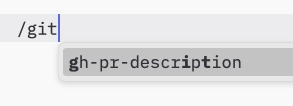
However, implementors are free to expose prompts through any interface pattern that suits their needs—the protocol itself does not mandate any specific user interaction model.
Capabilities
Servers that support prompts MUST declare the prompts capability during
initialization:
{
  "capabilities": {
    "prompts": {
      "listChanged": true
    }
  }
}
listChanged indicates whether the server will emit notifications when the list of
available prompts changes.
Protocol Messages
Listing Prompts
To retrieve available prompts, clients send a prompts/list request. This operation
supports pagination.
Request:
{
  "jsonrpc": "2.0",
  "id": 1,
  "method": "prompts/list",
  "params": {
    "cursor": "optional-cursor-value"
  }
}
Response:
{
  "jsonrpc": "2.0",
  "id": 1,
  "result": {
    "prompts": [
      {
        "name": "code_review",
        "title": "Request Code Review",
        "description": "Asks the LLM to analyze code quality and suggest improvements",
        "arguments": [
          {
            "name": "code",
            "description": "The code to review",
            "required": true
          }
        ]
      }
    ],
    "nextCursor": "next-page-cursor"
  }
}
Getting a Prompt
To retrieve a specific prompt, clients send a prompts/get request. Arguments may be
auto-completed through the completion API.
Request:
{
  "jsonrpc": "2.0",
  "id": 2,
  "method": "prompts/get",
  "params": {
    "name": "code_review",
    "arguments": {
      "code": "def hello():\n    print('world')"
    }
  }
}
Response:
{
  "jsonrpc": "2.0",
  "id": 2,
  "result": {
    "description": "Code review prompt",
    "messages": [
      {
        "role": "user",
        "content": {
          "type": "text",
          "text": "Please review this Python code:\ndef hello():\n    print('world')"
        }
      }
    ]
  }
}
List Changed Notification
When the list of available prompts changes, servers that declared the listChanged
capability SHOULD send a notification:
{
  "jsonrpc": "2.0",
  "method": "notifications/prompts/list_changed"
}
Message Flow
Data Types
Prompt
A prompt definition includes:
name: Unique identifier for the prompttitle: Optional human-readable name of the prompt for display purposes.description: Optional human-readable descriptionarguments: Optional list of arguments for customization
PromptMessage
Messages in a prompt can contain:
role: Either "user" or "assistant" to indicate the speakercontent: One of the following content types:
Text Content
Text content represents plain text messages:
{
  "type": "text",
  "text": "The text content of the message"
}
This is the most common content type used for natural language interactions.
Image Content
Image content allows including visual information in messages:
{
  "type": "image",
  "data": "base64-encoded-image-data",
  "mimeType": "image/png"
}
The image data MUST be base64-encoded and include a valid MIME type. This enables multi-modal interactions where visual context is important.
Audio Content
Audio content allows including audio information in messages:
{
  "type": "audio",
  "data": "base64-encoded-audio-data",
  "mimeType": "audio/wav"
}
The audio data MUST be base64-encoded and include a valid MIME type. This enables multi-modal interactions where audio context is important.
Embedded Resources
Embedded resources allow referencing server-side resources directly in messages:
{
  "type": "resource",
  "resource": {
    "uri": "resource://example",
    "mimeType": "text/plain",
    "text": "Resource content"
  }
}
Resources can contain either text or binary (blob) data and MUST include:
- A valid resource URI
- The appropriate MIME type
- Either text content or base64-encoded blob data
Embedded resources enable prompts to seamlessly incorporate server-managed content like documentation, code samples, or other reference materials directly into the conversation flow.
Error Handling
Servers SHOULD return standard JSON-RPC errors for common failure cases:
- Invalid prompt name:
-32602(Invalid params) - Missing required arguments:
-32602(Invalid params) - Internal errors:
-32603(Internal error)
Implementation Considerations
- Servers SHOULD validate prompt arguments before processing
- Clients SHOULD handle pagination for large prompt lists
- Both parties SHOULD respect capability negotiation
Security
Implementations MUST carefully validate all prompt inputs and outputs to prevent injection attacks or unauthorized access to resources.
6.3 Resources
The Model Context Protocol (MCP) provides a standardized way for servers to expose resources to clients. Resources allow servers to share data that provides context to language models, such as files, database schemas, or application-specific information. Each resource is uniquely identified by a URI.
User Interaction Model
Resources in MCP are designed to be application-driven, with host applications determining how to incorporate context based on their needs.
For example, applications could:
- Expose resources through UI elements for explicit selection, in a tree or list view
- Allow the user to search through and filter available resources
- Implement automatic context inclusion, based on heuristics or the AI model's selection
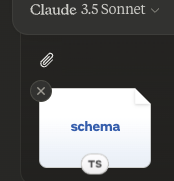
However, implementations are free to expose resources through any interface pattern that suits their needs—the protocol itself does not mandate any specific user interaction model.
Capabilities
Servers that support resources MUST declare the resources capability:
{
  "capabilities": {
    "resources": {
      "subscribe": true,
      "listChanged": true
    }
  }
}
The capability supports two optional features:
subscribe: whether the client can subscribe to be notified of changes to individual resources.listChanged: whether the server will emit notifications when the list of available resources changes.
Both subscribe and listChanged are optional—servers can support neither,
either, or both:
{
  "capabilities": {
    "resources": {} // Neither feature supported
  }
}
{
  "capabilities": {
    "resources": {
      "subscribe": true // Only subscriptions supported
    }
  }
}
{
  "capabilities": {
    "resources": {
      "listChanged": true // Only list change notifications supported
    }
  }
}
Protocol Messages
Listing Resources
To discover available resources, clients send a resources/list request. This operation
supports pagination.
Request:
{
  "jsonrpc": "2.0",
  "id": 1,
  "method": "resources/list",
  "params": {
    "cursor": "optional-cursor-value"
  }
}
Response:
{
  "jsonrpc": "2.0",
  "id": 1,
  "result": {
    "resources": [
      {
        "uri": "file:///project/src/main.rs",
        "name": "main.rs",
        "title": "Rust Software Application Main File",
        "description": "Primary application entry point",
        "mimeType": "text/x-rust"
      }
    ],
    "nextCursor": "next-page-cursor"
  }
}
Reading Resources
To retrieve resource contents, clients send a resources/read request:
Request:
{
  "jsonrpc": "2.0",
  "id": 2,
  "method": "resources/read",
  "params": {
    "uri": "file:///project/src/main.rs"
  }
}
Response:
{
  "jsonrpc": "2.0",
  "id": 2,
  "result": {
    "contents": [
      {
        "uri": "file:///project/src/main.rs",
        "mimeType": "text/x-rust",
        "text": "fn main() {\n    println!(\"Hello world!\");\n}"
      }
    ]
  }
}
Resource Templates
Resource templates allow servers to expose parameterized resources using URI templates. Arguments may be auto-completed through the completion API. This operation supports pagination.
Request:
{
  "jsonrpc": "2.0",
  "id": 3,
  "method": "resources/templates/list",
  "params": {
    "cursor": "optional-cursor-value"
  }
}
Response:
{
  "jsonrpc": "2.0",
  "id": 3,
  "result": {
    "resourceTemplates": [
      {
        "uriTemplate": "file:///{path}",
        "name": "Project Files",
        "title": "📁 Project Files",
        "description": "Access files in the project directory",
        "mimeType": "application/octet-stream"
      }
    ],
    "nextCursor": "next-page-cursor"
  }
}
List Changed Notification
When the list of available resources changes, servers that declared the listChanged
capability SHOULD send a notification:
{
  "jsonrpc": "2.0",
  "method": "notifications/resources/list_changed"
}
Subscriptions
The protocol supports optional subscriptions to resource changes. Clients can subscribe to specific resources and receive notifications when they change:
Subscribe Request:
{
  "jsonrpc": "2.0",
  "id": 4,
  "method": "resources/subscribe",
  "params": {
    "uri": "file:///project/src/main.rs"
  }
}
Update Notification:
{
  "jsonrpc": "2.0",
  "method": "notifications/resources/updated",
  "params": {
    "uri": "file:///project/src/main.rs"
  }
}
Message Flow
Data Types
Resource
A resource definition includes:
uri: Unique identifier for the resourcename: The name of the resource.title: Optional human-readable name of the resource for display purposes.description: Optional descriptionmimeType: Optional MIME typesize: Optional size in bytes
Resource Contents
Resources can contain either text or binary data:
Text Content
{
  "uri": "file:///example.txt",
  "mimeType": "text/plain",
  "text": "Resource content"
}
Binary Content
{
  "uri": "file:///example.png",
  "mimeType": "image/png",
  "blob": "base64-encoded-data"
}
Annotations
Resources, resource templates and content blocks support optional annotations that provide hints to clients about how to use or display the resource:
audience: An array indicating the intended audience(s) for this resource. Valid values are"user"and"assistant". For example,["user", "assistant"]indicates content useful for both.priority: A number from 0.0 to 1.0 indicating the importance of this resource. A value of 1 means "most important" (effectively required), while 0 means "least important" (entirely optional).lastModified: An ISO 8601 formatted timestamp indicating when the resource was last modified (e.g.,"2025-01-12T15:00:58Z").
Example resource with annotations:
{
  "uri": "file:///project/README.md",
  "name": "README.md",
  "title": "Project Documentation",
  "mimeType": "text/markdown",
  "annotations": {
    "audience": ["user"],
    "priority": 0.8,
    "lastModified": "2025-01-12T15:00:58Z"
  }
}
Clients can use these annotations to:
- Filter resources based on their intended audience
- Prioritize which resources to include in context
- Display modification times or sort by recency
Common URI Schemes
The protocol defines several standard URI schemes. This list not exhaustive—implementations are always free to use additional, custom URI schemes.
https://
Used to represent a resource available on the web.
Servers SHOULD use this scheme only when the client is able to fetch and load the resource directly from the web on its own—that is, it doesn’t need to read the resource via the MCP server.
For other use cases, servers SHOULD prefer to use another URI scheme, or define a custom one, even if the server will itself be downloading resource contents over the internet.
file://
Used to identify resources that behave like a filesystem. However, the resources do not need to map to an actual physical filesystem.
MCP servers MAY identify file:// resources with an
XDG MIME type,
like inode/directory, to represent non-regular files (such as directories) that don’t
otherwise have a standard MIME type.
git://
Git version control integration.
Custom URI Schemes
Custom URI schemes MUST be in accordance with RFC3986, taking the above guidance in to account.
Error Handling
Servers SHOULD return standard JSON-RPC errors for common failure cases:
- Resource not found:
-32002 - Internal errors:
-32603
Example error:
{
  "jsonrpc": "2.0",
  "id": 5,
  "error": {
    "code": -32002,
    "message": "Resource not found",
    "data": {
      "uri": "file:///nonexistent.txt"
    }
  }
}
Security Considerations
- Servers MUST validate all resource URIs
- Access controls SHOULD be implemented for sensitive resources
- Binary data MUST be properly encoded
- Resource permissions SHOULD be checked before operations
6.4 Tools
The Model Context Protocol (MCP) allows servers to expose tools that can be invoked by language models. Tools enable models to interact with external systems, such as querying databases, calling APIs, or performing computations. Each tool is uniquely identified by a name and includes metadata describing its schema.
User Interaction Model
Tools in MCP are designed to be model-controlled, meaning that the language model can discover and invoke tools automatically based on its contextual understanding and the user's prompts.
However, implementations are free to expose tools through any interface pattern that suits their needs—the protocol itself does not mandate any specific user interaction model.
Capabilities
Servers that support tools MUST declare the tools capability:
{
  "capabilities": {
    "tools": {
      "listChanged": true
    }
  }
}
listChanged indicates whether the server will emit notifications when the list of
available tools changes.
Protocol Messages
Listing Tools
To discover available tools, clients send a tools/list request. This operation supports
pagination.
Request:
{
  "jsonrpc": "2.0",
  "id": 1,
  "method": "tools/list",
  "params": {
    "cursor": "optional-cursor-value"
  }
}
Response:
{
  "jsonrpc": "2.0",
  "id": 1,
  "result": {
    "tools": [
      {
        "name": "get_weather",
        "title": "Weather Information Provider",
        "description": "Get current weather information for a location",
        "inputSchema": {
          "type": "object",
          "properties": {
            "location": {
              "type": "string",
              "description": "City name or zip code"
            }
          },
          "required": ["location"]
        }
      }
    ],
    "nextCursor": "next-page-cursor"
  }
}
Calling Tools
To invoke a tool, clients send a tools/call request:
Request:
{
  "jsonrpc": "2.0",
  "id": 2,
  "method": "tools/call",
  "params": {
    "name": "get_weather",
    "arguments": {
      "location": "New York"
    }
  }
}
Response:
{
  "jsonrpc": "2.0",
  "id": 2,
  "result": {
    "content": [
      {
        "type": "text",
        "text": "Current weather in New York:\nTemperature: 72°F\nConditions: Partly cloudy"
      }
    ],
    "isError": false
  }
}
List Changed Notification
When the list of available tools changes, servers that declared the listChanged
capability SHOULD send a notification:
{
  "jsonrpc": "2.0",
  "method": "notifications/tools/list_changed"
}
Message Flow
Data Types
Tool
A tool definition includes:
name: Unique identifier for the tooltitle: Optional human-readable name of the tool for display purposes.description: Human-readable description of functionalityinputSchema: JSON Schema defining expected parametersoutputSchema: Optional JSON Schema defining expected output structureannotations: optional properties describing tool behavior
Tool Result
Tool results may contain structured or unstructured content.
Unstructured content is returned in the content field of a result, and can contain multiple content items of different types:
Text Content
{
  "type": "text",
  "text": "Tool result text"
}
Image Content
{
  "type": "image",
  "data": "base64-encoded-data",
  "mimeType": "image/png",
  "annotations": {
    "audience": ["user"],
    "priority": 0.9
  }
}
This example demonstrates the use of an optional Annotation.
Audio Content
{
  "type": "audio",
  "data": "base64-encoded-audio-data",
  "mimeType": "audio/wav"
}
Resource Links
A tool MAY return links to Resources, to provide additional context or data. In this case, the tool will return a URI that can be subscribed to or fetched by the client:
{
  "type": "resource_link",
  "uri": "file:///project/src/main.rs",
  "name": "main.rs",
  "description": "Primary application entry point",
  "mimeType": "text/x-rust",
  "annotations": {
    "audience": ["assistant"],
    "priority": 0.9
  }
}
Resource links support the same Resource annotations as regular resources to help clients understand how to use them.
Embedded Resources
Resources MAY be embedded to provide additional context
or data using a suitable URI scheme. Servers that use embedded resources SHOULD implement the resources capability:
{
  "type": "resource",
  "resource": {
    "uri": "file:///project/src/main.rs",
    "mimeType": "text/x-rust",
    "text": "fn main() {\n    println!(\"Hello world!\");\n}",
    "annotations": {
      "audience": ["user", "assistant"],
      "priority": 0.7,
      "lastModified": "2025-05-03T14:30:00Z"
    }
  }
}
Embedded resources support the same Resource annotations as regular resources to help clients understand how to use them.
Structured Content
Structured content is returned as a JSON object in the structuredContent field of a result.
For backwards compatibility, a tool that returns structured content SHOULD also return the serialized JSON in a TextContent block.
Output Schema
Tools may also provide an output schema for validation of structured results. If an output schema is provided:
- Servers MUST provide structured results that conform to this schema.
- Clients SHOULD validate structured results against this schema.
Example tool with output schema:
{
  "name": "get_weather_data",
  "title": "Weather Data Retriever",
  "description": "Get current weather data for a location",
  "inputSchema": {
    "type": "object",
    "properties": {
      "location": {
        "type": "string",
        "description": "City name or zip code"
      }
    },
    "required": ["location"]
  },
  "outputSchema": {
    "type": "object",
    "properties": {
      "temperature": {
        "type": "number",
        "description": "Temperature in celsius"
      },
      "conditions": {
        "type": "string",
        "description": "Weather conditions description"
      },
      "humidity": {
        "type": "number",
        "description": "Humidity percentage"
      }
    },
    "required": ["temperature", "conditions", "humidity"]
  }
}
Example valid response for this tool:
{
  "jsonrpc": "2.0",
  "id": 5,
  "result": {
    "content": [
      {
        "type": "text",
        "text": "{\"temperature\": 22.5, \"conditions\": \"Partly cloudy\", \"humidity\": 65}"
      }
    ],
    "structuredContent": {
      "temperature": 22.5,
      "conditions": "Partly cloudy",
      "humidity": 65
    }
  }
}
Providing an output schema helps clients and LLMs understand and properly handle structured tool outputs by:
- Enabling strict schema validation of responses
- Providing type information for better integration with programming languages
- Guiding clients and LLMs to properly parse and utilize the returned data
- Supporting better documentation and developer experience
Error Handling
Tools use two error reporting mechanisms:
-
Protocol Errors: Standard JSON-RPC errors for issues like:
- Unknown tools
- Invalid arguments
- Server errors
-
Tool Execution Errors: Reported in tool results with
isError: true:- API failures
- Invalid input data
- Business logic errors
Example protocol error:
{
  "jsonrpc": "2.0",
  "id": 3,
  "error": {
    "code": -32602,
    "message": "Unknown tool: invalid_tool_name"
  }
}
Example tool execution error:
{
  "jsonrpc": "2.0",
  "id": 4,
  "result": {
    "content": [
      {
        "type": "text",
        "text": "Failed to fetch weather data: API rate limit exceeded"
      }
    ],
    "isError": true
  }
}
Security Considerations
-
Servers MUST:
- Validate all tool inputs
- Implement proper access controls
- Rate limit tool invocations
- Sanitize tool outputs
-
Clients SHOULD:
- Prompt for user confirmation on sensitive operations
- Show tool inputs to the user before calling the server, to avoid malicious or accidental data exfiltration
- Validate tool results before passing to LLM
- Implement timeouts for tool calls
- Log tool usage for audit purposes
6.5 Utilities
6.5.1 Completion
The Model Context Protocol (MCP) provides a standardized way for servers to offer argument autocompletion suggestions for prompts and resource URIs. This enables rich, IDE-like experiences where users receive contextual suggestions while entering argument values.
User Interaction Model
Completion in MCP is designed to support interactive user experiences similar to IDE code completion.
For example, applications may show completion suggestions in a dropdown or popup menu as users type, with the ability to filter and select from available options.
However, implementations are free to expose completion through any interface pattern that suits their needs—the protocol itself does not mandate any specific user interaction model.
Capabilities
Servers that support completions MUST declare the completions capability:
{
  "capabilities": {
    "completions": {}
  }
}
Protocol Messages
Requesting Completions
To get completion suggestions, clients send a completion/complete request specifying
what is being completed through a reference type:
Request:
{
  "jsonrpc": "2.0",
  "id": 1,
  "method": "completion/complete",
  "params": {
    "ref": {
      "type": "ref/prompt",
      "name": "code_review"
    },
    "argument": {
      "name": "language",
      "value": "py"
    }
  }
}
Response:
{
  "jsonrpc": "2.0",
  "id": 1,
  "result": {
    "completion": {
      "values": ["python", "pytorch", "pyside"],
      "total": 10,
      "hasMore": true
    }
  }
}
For prompts or URI templates with multiple arguments, clients should include previous completions in the context.arguments object to provide context for subsequent requests.
Request:
{
  "jsonrpc": "2.0",
  "id": 1,
  "method": "completion/complete",
  "params": {
    "ref": {
      "type": "ref/prompt",
      "name": "code_review"
    },
    "argument": {
      "name": "framework",
      "value": "fla"
    },
    "context": {
      "arguments": {
        "language": "python"
      }
    }
  }
}
Response:
{
  "jsonrpc": "2.0",
  "id": 1,
  "result": {
    "completion": {
      "values": ["flask"],
      "total": 1,
      "hasMore": false
    }
  }
}
Reference Types
The protocol supports two types of completion references:
| Type | Description | Example |
|---|---|---|
ref/prompt |
References a prompt by name | {"type": "ref/prompt", "name": "code_review"} |
ref/resource |
References a resource URI | {"type": "ref/resource", "uri": "file:///{path}"} |
Completion Results
Servers return an array of completion values ranked by relevance, with:
- Maximum 100 items per response
- Optional total number of available matches
- Boolean indicating if additional results exist
Message Flow
Data Types
CompleteRequest
ref: APromptReferenceorResourceReferenceargument: Object containing:name: Argument namevalue: Current value
context: Object containing:arguments: A mapping of already-resolved argument names to their values.
CompleteResult
completion: Object containing:values: Array of suggestions (max 100)total: Optional total matcheshasMore: Additional results flag
Error Handling
Servers SHOULD return standard JSON-RPC errors for common failure cases:
- Method not found:
-32601(Capability not supported) - Invalid prompt name:
-32602(Invalid params) - Missing required arguments:
-32602(Invalid params) - Internal errors:
-32603(Internal error)
Implementation Considerations
-
Servers SHOULD:
- Return suggestions sorted by relevance
- Implement fuzzy matching where appropriate
- Rate limit completion requests
- Validate all inputs
-
Clients SHOULD:
- Debounce rapid completion requests
- Cache completion results where appropriate
- Handle missing or partial results gracefully
Security
Implementations MUST:
- Validate all completion inputs
- Implement appropriate rate limiting
- Control access to sensitive suggestions
- Prevent completion-based information disclosure
6.5.2 Logging
The Model Context Protocol (MCP) provides a standardized way for servers to send structured log messages to clients. Clients can control logging verbosity by setting minimum log levels, with servers sending notifications containing severity levels, optional logger names, and arbitrary JSON-serializable data.
User Interaction Model
Implementations are free to expose logging through any interface pattern that suits their needs—the protocol itself does not mandate any specific user interaction model.
Capabilities
Servers that emit log message notifications MUST declare the logging capability:
{
  "capabilities": {
    "logging": {}
  }
}
Log Levels
The protocol follows the standard syslog severity levels specified in RFC 5424:
| Level | Description | Example Use Case |
|---|---|---|
| debug | Detailed debugging information | Function entry/exit points |
| info | General informational messages | Operation progress updates |
| notice | Normal but significant events | Configuration changes |
| warning | Warning conditions | Deprecated feature usage |
| error | Error conditions | Operation failures |
| critical | Critical conditions | System component failures |
| alert | Action must be taken immediately | Data corruption detected |
| emergency | System is unusable | Complete system failure |
Protocol Messages
Setting Log Level
To configure the minimum log level, clients MAY send a logging/setLevel request:
Request:
{
  "jsonrpc": "2.0",
  "id": 1,
  "method": "logging/setLevel",
  "params": {
    "level": "info"
  }
}
Log Message Notifications
Servers send log messages using notifications/message notifications:
{
  "jsonrpc": "2.0",
  "method": "notifications/message",
  "params": {
    "level": "error",
    "logger": "database",
    "data": {
      "error": "Connection failed",
      "details": {
        "host": "localhost",
        "port": 5432
      }
    }
  }
}
Message Flow
Error Handling
Servers SHOULD return standard JSON-RPC errors for common failure cases:
- Invalid log level:
-32602(Invalid params) - Configuration errors:
-32603(Internal error)
Implementation Considerations
-
Servers SHOULD:
- Rate limit log messages
- Include relevant context in data field
- Use consistent logger names
- Remove sensitive information
-
Clients MAY:
- Present log messages in the UI
- Implement log filtering/search
- Display severity visually
- Persist log messages
Security
-
Log messages MUST NOT contain:
- Credentials or secrets
- Personal identifying information
- Internal system details that could aid attacks
-
Implementations SHOULD:
- Rate limit messages
- Validate all data fields
- Control log access
- Monitor for sensitive content
6.5.3 Pagination
The Model Context Protocol (MCP) supports paginating list operations that may return large result sets. Pagination allows servers to yield results in smaller chunks rather than all at once.
Pagination is especially important when connecting to external services over the internet, but also useful for local integrations to avoid performance issues with large data sets.
Pagination Model
Pagination in MCP uses an opaque cursor-based approach, instead of numbered pages.
- The cursor is an opaque string token, representing a position in the result set
- Page size is determined by the server, and clients MUST NOT assume a fixed page size
Response Format
Pagination starts when the server sends a response that includes:
- The current page of results
- An optional
nextCursorfield if more results exist
{
  "jsonrpc": "2.0",
  "id": "123",
  "result": {
    "resources": [...],
    "nextCursor": "eyJwYWdlIjogM30="
  }
}
Request Format
After receiving a cursor, the client can continue paginating by issuing a request including that cursor:
{
  "jsonrpc": "2.0",
  "id": "124",
  "method": "resources/list",
  "params": {
    "cursor": "eyJwYWdlIjogMn0="
  }
}
Pagination Flow
Operations Supporting Pagination
The following MCP operations support pagination:
resources/list- List available resourcesresources/templates/list- List resource templatesprompts/list- List available promptstools/list- List available tools
Implementation Guidelines
-
Servers SHOULD:
- Provide stable cursors
- Handle invalid cursors gracefully
-
Clients SHOULD:
- Treat a missing
nextCursoras the end of results - Support both paginated and non-paginated flows
- Treat a missing
-
Clients MUST treat cursors as opaque tokens:
- Don't make assumptions about cursor format
- Don't attempt to parse or modify cursors
- Don't persist cursors across sessions
Error Handling
Invalid cursors SHOULD result in an error with code -32602 (Invalid params).
7 Schema Reference
JSON-RPC
JSONRPCError
jsonrpc: "2.0";
id: RequestId;
error: { code: number; message: string; data?: unknown };
}
- code: number
The error type that occurred.
- message: string
A short description of the error. The message SHOULD be limited to a concise single sentence.
-
Optionaldata?: unknownAdditional information about the error. The value of this member is defined by the sender (e.g. detailed error information, nested errors etc.).
JSONRPCMessage
Refers to any valid JSON-RPC object that can be decoded off the wire, or encoded to be sent.
JSONRPCNotification
method: string;
params?: { _meta?: { [key: string]: unknown }; [key: string]: unknown };
jsonrpc: "2.0";
}
A notification which does not expect a response.
- [key: string]: unknown
-
Optional_meta?: { [key: string]: unknown }See General fields:
_metafor notes on_metausage.
JSONRPCRequest
method: string;
params?: {
_meta?: { progressToken?: ProgressToken; [key: string]: unknown };
[key: string]: unknown;
};
jsonrpc: "2.0";
id: RequestId;
}
A request that expects a response.
- [key: string]: unknown
-
See General fields:
_metafor notes on_metausage.-
If specified, the caller is requesting out-of-band progress notifications for this request (as represented by notifications/progress). The value of this parameter is an opaque token that will be attached to any subsequent notifications. The receiver is not obligated to provide these notifications.
-
JSONRPCResponse
A successful (non-error) response to a request.
Common Types
Annotations
Optional annotations for the client. The client can use annotations to inform how objects are used or displayed
Describes who the intended customer of this object or data is.
It can include multiple entries to indicate content useful for multiple audiences (e.g., ["user", "assistant"]).
Describes how important this data is for operating the server.
A value of 1 means "most important," and indicates that the data is effectively required, while 0 means "least important," and indicates that the data is entirely optional.
The moment the resource was last modified, as an ISO 8601 formatted string.
Should be an ISO 8601 formatted string (e.g., "2025-01-12T15:00:58Z").
Examples: last activity timestamp in an open file, timestamp when the resource was attached, etc.
Cursor
An opaque token used to represent a cursor for pagination.
LoggingLevel
| "debug"
| "info"
| "notice"
| "warning"
| "error"
| "critical"
| "alert"
| "emergency"
The severity of a log message.
These map to syslog message severities, as specified in RFC-5424: https://datatracker.ietf.org/doc/html/rfc5424#section-6.2.1
ProgressToken
A progress token, used to associate progress notifications with the original request.
RequestId
A uniquely identifying ID for a request in JSON-RPC.
Result
See General fields: _meta for notes on _meta usage.
Role
The sender or recipient of messages and data in a conversation.
Content
AudioContent
type: "audio";
data: string;
mimeType: string;
annotations?: Annotations;
_meta?: { [key: string]: unknown };
}
Audio provided to or from an LLM.
The base64-encoded audio data.
The MIME type of the audio. Different providers may support different audio types.
Optional annotations for the client.
See General fields: _meta for notes on _meta usage.
BlobResourceContents
uri: string;
mimeType?: string;
_meta?: { [key: string]: unknown };
blob: string;
}
The URI of this resource.
The MIME type of this resource, if known.
See General fields: _meta for notes on _meta usage.
A base64-encoded string representing the binary data of the item.
ContentBlock
EmbeddedResource
type: "resource";
resource: TextResourceContents | BlobResourceContents;
annotations?: Annotations;
_meta?: { [key: string]: unknown };
}
The contents of a resource, embedded into a prompt or tool call result.
It is up to the client how best to render embedded resources for the benefit of the LLM and/or the user.
Optional annotations for the client.
See General fields: _meta for notes on _meta usage.
ImageContent
type: "image";
data: string;
mimeType: string;
annotations?: Annotations;
_meta?: { [key: string]: unknown };
}
An image provided to or from an LLM.
The base64-encoded image data.
The MIME type of the image. Different providers may support different image types.
Optional annotations for the client.
See General fields: _meta for notes on _meta usage.
ResourceLink
name: string;
title?: string;
uri: string;
description?: string;
mimeType?: string;
annotations?: Annotations;
size?: number;
_meta?: { [key: string]: unknown };
type: "resource_link";
}
A resource that the server is capable of reading, included in a prompt or tool call result.
Note: resource links returned by tools are not guaranteed to appear in the results of resources/list requests.
Intended for programmatic or logical use, but used as a display name in past specs or fallback (if title isn't present).
Intended for UI and end-user contexts — optimized to be human-readable and easily understood, even by those unfamiliar with domain-specific terminology.
If not provided, the name should be used for display (except for Tool,
where annotations.title should be given precedence over using name,
if present).
The URI of this resource.
A description of what this resource represents.
This can be used by clients to improve the LLM's understanding of available resources. It can be thought of like a "hint" to the model.
The MIME type of this resource, if known.
Optional annotations for the client.
The size of the raw resource content, in bytes (i.e., before base64 encoding or any tokenization), if known.
This can be used by Hosts to display file sizes and estimate context window usage.
See General fields: _meta for notes on _meta usage.
TextContent
type: "text";
text: string;
annotations?: Annotations;
_meta?: { [key: string]: unknown };
}
Text provided to or from an LLM.
The text content of the message.
Optional annotations for the client.
See General fields: _meta for notes on _meta usage.
TextResourceContents
uri: string;
mimeType?: string;
_meta?: { [key: string]: unknown };
text: string;
}
The URI of this resource.
The MIME type of this resource, if known.
See General fields: _meta for notes on _meta usage.
The text of the item. This must only be set if the item can actually be represented as text (not binary data).
completion/complete
CompleteRequest
method: "completion/complete";
params: {
ref: PromptReference | ResourceTemplateReference;
argument: { name: string; value: string };
context?: { arguments?: { [key: string]: string } };
};
}
A request from the client to the server, to ask for completion options.
- argument: { name: string; value: string }
The argument's information
- name: string
The name of the argument
- value: string
The value of the argument to use for completion matching.
-
-
Optionalcontext?: { arguments?: { [key: string]: string } }Additional, optional context for completions
-
Optionalarguments?: { [key: string]: string }Previously-resolved variables in a URI template or prompt.
-
CompleteResult
_meta?: { [key: string]: unknown };
completion: { values: string[]; total?: number; hasMore?: boolean };
[key: string]: unknown;
}
The server's response to a completion/complete request
See General fields: _meta for notes on _meta usage.
- values: string[]
An array of completion values. Must not exceed 100 items.
-
Optionaltotal?: numberThe total number of completion options available. This can exceed the number of values actually sent in the response.
-
OptionalhasMore?: booleanIndicates whether there are additional completion options beyond those provided in the current response, even if the exact total is unknown.
PromptReference
Identifies a prompt.
Intended for programmatic or logical use, but used as a display name in past specs or fallback (if title isn't present).
Intended for UI and end-user contexts — optimized to be human-readable and easily understood, even by those unfamiliar with domain-specific terminology.
If not provided, the name should be used for display (except for Tool,
where annotations.title should be given precedence over using name,
if present).
ResourceTemplateReference
A reference to a resource or resource template definition.
The URI or URI template of the resource.
elicitation/create
ElicitRequest
method: "elicitation/create";
params: {
message: string;
requestedSchema: {
type: "object";
properties: { [key: string]: PrimitiveSchemaDefinition };
required?: string[];
};
};
}
A request from the server to elicit additional information from the user via the client.
- message: string
The message to present to the user.
- requestedSchema: {
type: "object";
properties: { [key: string]: PrimitiveSchemaDefinition };
required?: string[];
}A restricted subset of JSON Schema. Only top-level properties are allowed, without nesting.
ElicitResult
_meta?: { [key: string]: unknown };
action: "accept" | "decline" | "cancel";
content?: { [key: string]: string | number | boolean };
[key: string]: unknown;
}
The client's response to an elicitation request.
See General fields: _meta for notes on _meta usage.
The user action in response to the elicitation.
- "accept": User submitted the form/confirmed the action
- "decline": User explicitly declined the action
- "cancel": User dismissed without making an explicit choice
The submitted form data, only present when action is "accept". Contains values matching the requested schema.
BooleanSchema
type: "boolean";
title?: string;
description?: string;
default?: boolean;
}
EnumSchema
type: "string";
title?: string;
description?: string;
enum: string[];
enumNames?: string[];
}
NumberSchema
type: "number" | "integer";
title?: string;
description?: string;
minimum?: number;
maximum?: number;
}
PrimitiveSchemaDefinition
Restricted schema definitions that only allow primitive types without nested objects or arrays.
StringSchema
type: "string";
title?: string;
description?: string;
minLength?: number;
maxLength?: number;
format?: "uri" | "email" | "date" | "date-time";
}
initialize
InitializeRequest
method: "initialize";
params: {
protocolVersion: string;
capabilities: ClientCapabilities;
clientInfo: Implementation;
};
}
This request is sent from the client to the server when it first connects, asking it to begin initialization.
- protocolVersion: string
The latest version of the Model Context Protocol that the client supports. The client MAY decide to support older versions as well.
InitializeResult
_meta?: { [key: string]: unknown };
protocolVersion: string;
capabilities: ServerCapabilities;
serverInfo: Implementation;
instructions?: string;
[key: string]: unknown;
}
After receiving an initialize request from the client, the server sends this response.
See General fields: _meta for notes on _meta usage.
The version of the Model Context Protocol that the server wants to use. This may not match the version that the client requested. If the client cannot support this version, it MUST disconnect.
Instructions describing how to use the server and its features.
This can be used by clients to improve the LLM's understanding of available tools, resources, etc. It can be thought of like a "hint" to the model. For example, this information MAY be added to the system prompt.
ClientCapabilities
experimental?: { [key: string]: object };
roots?: { listChanged?: boolean };
sampling?: object;
elicitation?: object;
}
Capabilities a client may support. Known capabilities are defined here, in this schema, but this is not a closed set: any client can define its own, additional capabilities.
Experimental, non-standard capabilities that the client supports.
Present if the client supports listing roots.
-
OptionallistChanged?: booleanWhether the client supports notifications for changes to the roots list.
Present if the client supports sampling from an LLM.
Present if the client supports elicitation from the server.
Implementation
Describes the name and version of an MCP implementation, with an optional title for UI representation.
Intended for programmatic or logical use, but used as a display name in past specs or fallback (if title isn't present).
Intended for UI and end-user contexts — optimized to be human-readable and easily understood, even by those unfamiliar with domain-specific terminology.
If not provided, the name should be used for display (except for Tool,
where annotations.title should be given precedence over using name,
if present).
ServerCapabilities
experimental?: { [key: string]: object };
logging?: object;
completions?: object;
prompts?: { listChanged?: boolean };
resources?: { subscribe?: boolean; listChanged?: boolean };
tools?: { listChanged?: boolean };
}
Capabilities that a server may support. Known capabilities are defined here, in this schema, but this is not a closed set: any server can define its own, additional capabilities.
Experimental, non-standard capabilities that the server supports.
Present if the server supports sending log messages to the client.
Present if the server supports argument autocompletion suggestions.
Present if the server offers any prompt templates.
-
OptionallistChanged?: booleanWhether this server supports notifications for changes to the prompt list.
Present if the server offers any resources to read.
-
Optionalsubscribe?: booleanWhether this server supports subscribing to resource updates.
-
OptionallistChanged?: booleanWhether this server supports notifications for changes to the resource list.
Present if the server offers any tools to call.
-
OptionallistChanged?: booleanWhether this server supports notifications for changes to the tool list.
logging/setLevel
SetLevelRequest
A request from the client to the server, to enable or adjust logging.
-
The level of logging that the client wants to receive from the server. The server should send all logs at this level and higher (i.e., more severe) to the client as notifications/message.
notifications/cancelled
CancelledNotification
method: "notifications/cancelled";
params: { requestId: RequestId; reason?: string };
}
This notification can be sent by either side to indicate that it is cancelling a previously-issued request.
The request SHOULD still be in-flight, but due to communication latency, it is always possible that this notification MAY arrive after the request has already finished.
This notification indicates that the result will be unused, so any associated processing SHOULD cease.
A client MUST NOT attempt to cancel its initialize request.
-
The ID of the request to cancel.
This MUST correspond to the ID of a request previously issued in the same direction.
-
Optionalreason?: stringAn optional string describing the reason for the cancellation. This MAY be logged or presented to the user.
notifications/initialized
InitializedNotification
params?: { _meta?: { [key: string]: unknown }; [key: string]: unknown };
method: "notifications/initialized";
}
This notification is sent from the client to the server after initialization has finished.
- [key: string]: unknown
-
Optional_meta?: { [key: string]: unknown }See General fields:
_metafor notes on_metausage.
notifications/message
LoggingMessageNotification
method: "notifications/message";
params: { level: LoggingLevel; logger?: string; data: unknown };
}
Notification of a log message passed from server to client. If no logging/setLevel request has been sent from the client, the server MAY decide which messages to send automatically.
-
The severity of this log message.
-
Optionallogger?: stringAn optional name of the logger issuing this message.
- data: unknown
The data to be logged, such as a string message or an object. Any JSON serializable type is allowed here.
notifications/progress
ProgressNotification
method: "notifications/progress";
params: {
progressToken: ProgressToken;
progress: number;
total?: number;
message?: string;
};
}
An out-of-band notification used to inform the receiver of a progress update for a long-running request.
-
The progress token which was given in the initial request, used to associate this notification with the request that is proceeding.
- progress: number
The progress thus far. This should increase every time progress is made, even if the total is unknown.
-
Optionaltotal?: numberTotal number of items to process (or total progress required), if known.
-
Optionalmessage?: stringAn optional message describing the current progress.
notifications/prompts/list_changed
PromptListChangedNotification
params?: { _meta?: { [key: string]: unknown }; [key: string]: unknown };
method: "notifications/prompts/list_changed";
}
An optional notification from the server to the client, informing it that the list of prompts it offers has changed. This may be issued by servers without any previous subscription from the client.
- [key: string]: unknown
-
Optional_meta?: { [key: string]: unknown }See General fields:
_metafor notes on_metausage.
notifications/resources/list_changed
ResourceListChangedNotification
params?: { _meta?: { [key: string]: unknown }; [key: string]: unknown };
method: "notifications/resources/list_changed";
}
An optional notification from the server to the client, informing it that the list of resources it can read from has changed. This may be issued by servers without any previous subscription from the client.
- [key: string]: unknown
-
Optional_meta?: { [key: string]: unknown }See General fields:
_metafor notes on_metausage.
notifications/resources/updated
ResourceUpdatedNotification
method: "notifications/resources/updated";
params: { uri: string };
}
A notification from the server to the client, informing it that a resource has changed and may need to be read again. This should only be sent if the client previously sent a resources/subscribe request.
- uri: string
The URI of the resource that has been updated. This might be a sub-resource of the one that the client actually subscribed to.
notifications/roots/list_changed
RootsListChangedNotification
params?: { _meta?: { [key: string]: unknown }; [key: string]: unknown };
method: "notifications/roots/list_changed";
}
A notification from the client to the server, informing it that the list of roots has changed. This notification should be sent whenever the client adds, removes, or modifies any root. The server should then request an updated list of roots using the ListRootsRequest.
- [key: string]: unknown
-
Optional_meta?: { [key: string]: unknown }See General fields:
_metafor notes on_metausage.
notifications/tools/list_changed
ToolListChangedNotification
params?: { _meta?: { [key: string]: unknown }; [key: string]: unknown };
method: "notifications/tools/list_changed";
}
An optional notification from the server to the client, informing it that the list of tools it offers has changed. This may be issued by servers without any previous subscription from the client.
- [key: string]: unknown
-
Optional_meta?: { [key: string]: unknown }See General fields:
_metafor notes on_metausage.
ping
PingRequest
params?: {
_meta?: { progressToken?: ProgressToken; [key: string]: unknown };
[key: string]: unknown;
};
method: "ping";
}
A ping, issued by either the server or the client, to check that the other party is still alive. The receiver must promptly respond, or else may be disconnected.
- [key: string]: unknown
-
See General fields:
_metafor notes on_metausage.-
If specified, the caller is requesting out-of-band progress notifications for this request (as represented by notifications/progress). The value of this parameter is an opaque token that will be attached to any subsequent notifications. The receiver is not obligated to provide these notifications.
-
prompts/get
GetPromptRequest
method: "prompts/get";
params: { name: string; arguments?: { [key: string]: string } };
}
Used by the client to get a prompt provided by the server.
- name: string
The name of the prompt or prompt template.
-
Optionalarguments?: { [key: string]: string }Arguments to use for templating the prompt.
GetPromptResult
_meta?: { [key: string]: unknown };
description?: string;
messages: PromptMessage[];
[key: string]: unknown;
}
The server's response to a prompts/get request from the client.
See General fields: _meta for notes on _meta usage.
An optional description for the prompt.
PromptMessage
Describes a message returned as part of a prompt.
This is similar to SamplingMessage, but also supports the embedding of
resources from the MCP server.
prompts/list
ListPromptsRequest
Sent from the client to request a list of prompts and prompt templates the server has.
-
Optionalcursor?: stringAn opaque token representing the current pagination position. If provided, the server should return results starting after this cursor.
ListPromptsResult
_meta?: { [key: string]: unknown };
nextCursor?: string;
prompts: Prompt[];
[key: string]: unknown;
}
The server's response to a prompts/list request from the client.
See General fields: _meta for notes on _meta usage.
An opaque token representing the pagination position after the last returned result. If present, there may be more results available.
Prompt
name: string;
title?: string;
description?: string;
arguments?: PromptArgument[];
_meta?: { [key: string]: unknown };
}
A prompt or prompt template that the server offers.
Intended for programmatic or logical use, but used as a display name in past specs or fallback (if title isn't present).
Intended for UI and end-user contexts — optimized to be human-readable and easily understood, even by those unfamiliar with domain-specific terminology.
If not provided, the name should be used for display (except for Tool,
where annotations.title should be given precedence over using name,
if present).
An optional description of what this prompt provides
A list of arguments to use for templating the prompt.
See General fields: _meta for notes on _meta usage.
PromptArgument
Describes an argument that a prompt can accept.
Intended for programmatic or logical use, but used as a display name in past specs or fallback (if title isn't present).
Intended for UI and end-user contexts — optimized to be human-readable and easily understood, even by those unfamiliar with domain-specific terminology.
If not provided, the name should be used for display (except for Tool,
where annotations.title should be given precedence over using name,
if present).
A human-readable description of the argument.
Whether this argument must be provided.
resources/list
ListResourcesRequest
Sent from the client to request a list of resources the server has.
-
Optionalcursor?: stringAn opaque token representing the current pagination position. If provided, the server should return results starting after this cursor.
ListResourcesResult
_meta?: { [key: string]: unknown };
nextCursor?: string;
resources: Resource[];
[key: string]: unknown;
}
The server's response to a resources/list request from the client.
See General fields: _meta for notes on _meta usage.
An opaque token representing the pagination position after the last returned result. If present, there may be more results available.
Resource
name: string;
title?: string;
uri: string;
description?: string;
mimeType?: string;
annotations?: Annotations;
size?: number;
_meta?: { [key: string]: unknown };
}
A known resource that the server is capable of reading.
Intended for programmatic or logical use, but used as a display name in past specs or fallback (if title isn't present).
Intended for UI and end-user contexts — optimized to be human-readable and easily understood, even by those unfamiliar with domain-specific terminology.
If not provided, the name should be used for display (except for Tool,
where annotations.title should be given precedence over using name,
if present).
The URI of this resource.
A description of what this resource represents.
This can be used by clients to improve the LLM's understanding of available resources. It can be thought of like a "hint" to the model.
The MIME type of this resource, if known.
Optional annotations for the client.
The size of the raw resource content, in bytes (i.e., before base64 encoding or any tokenization), if known.
This can be used by Hosts to display file sizes and estimate context window usage.
See General fields: _meta for notes on _meta usage.
resources/read
ReadResourceRequest
Sent from the client to the server, to read a specific resource URI.
- uri: string
The URI of the resource to read. The URI can use any protocol; it is up to the server how to interpret it.
ReadResourceResult
_meta?: { [key: string]: unknown };
contents: (TextResourceContents | BlobResourceContents)[];
[key: string]: unknown;
}
The server's response to a resources/read request from the client.
See General fields: _meta for notes on _meta usage.
resources/subscribe
SubscribeRequest
Sent from the client to request resources/updated notifications from the server whenever a particular resource changes.
- uri: string
The URI of the resource to subscribe to. The URI can use any protocol; it is up to the server how to interpret it.
resources/templates/list
ListResourceTemplatesRequest
params?: { cursor?: string };
method: "resources/templates/list";
}
Sent from the client to request a list of resource templates the server has.
-
Optionalcursor?: stringAn opaque token representing the current pagination position. If provided, the server should return results starting after this cursor.
ListResourceTemplatesResult
_meta?: { [key: string]: unknown };
nextCursor?: string;
resourceTemplates: ResourceTemplate[];
[key: string]: unknown;
}
The server's response to a resources/templates/list request from the client.
See General fields: _meta for notes on _meta usage.
An opaque token representing the pagination position after the last returned result. If present, there may be more results available.
ResourceTemplate
name: string;
title?: string;
uriTemplate: string;
description?: string;
mimeType?: string;
annotations?: Annotations;
_meta?: { [key: string]: unknown };
}
A template description for resources available on the server.
Intended for programmatic or logical use, but used as a display name in past specs or fallback (if title isn't present).
Intended for UI and end-user contexts — optimized to be human-readable and easily understood, even by those unfamiliar with domain-specific terminology.
If not provided, the name should be used for display (except for Tool,
where annotations.title should be given precedence over using name,
if present).
A URI template (according to RFC 6570) that can be used to construct resource URIs.
A description of what this template is for.
This can be used by clients to improve the LLM's understanding of available resources. It can be thought of like a "hint" to the model.
The MIME type for all resources that match this template. This should only be included if all resources matching this template have the same type.
Optional annotations for the client.
See General fields: _meta for notes on _meta usage.
resources/unsubscribe
UnsubscribeRequest
Sent from the client to request cancellation of resources/updated notifications from the server. This should follow a previous resources/subscribe request.
- uri: string
The URI of the resource to unsubscribe from.
roots/list
ListRootsRequest
params?: {
_meta?: { progressToken?: ProgressToken; [key: string]: unknown };
[key: string]: unknown;
};
method: "roots/list";
}
Sent from the server to request a list of root URIs from the client. Roots allow servers to ask for specific directories or files to operate on. A common example for roots is providing a set of repositories or directories a server should operate on.
This request is typically used when the server needs to understand the file system structure or access specific locations that the client has permission to read from.
- [key: string]: unknown
-
See General fields:
_metafor notes on_metausage.-
If specified, the caller is requesting out-of-band progress notifications for this request (as represented by notifications/progress). The value of this parameter is an opaque token that will be attached to any subsequent notifications. The receiver is not obligated to provide these notifications.
-
ListRootsResult
_meta?: { [key: string]: unknown };
roots: Root[];
[key: string]: unknown;
}
The client's response to a roots/list request from the server. This result contains an array of Root objects, each representing a root directory or file that the server can operate on.
See General fields: _meta for notes on _meta usage.
Root
Represents a root directory or file that the server can operate on.
The URI identifying the root. This must start with file:// for now. This restriction may be relaxed in future versions of the protocol to allow other URI schemes.
An optional name for the root. This can be used to provide a human-readable identifier for the root, which may be useful for display purposes or for referencing the root in other parts of the application.
See General fields: _meta for notes on _meta usage.
sampling/createMessage
CreateMessageRequest
method: "sampling/createMessage";
params: {
messages: SamplingMessage[];
modelPreferences?: ModelPreferences;
systemPrompt?: string;
includeContext?: "none" | "thisServer" | "allServers";
temperature?: number;
maxTokens: number;
stopSequences?: string[];
metadata?: object;
};
}
A request from the server to sample an LLM via the client. The client has full discretion over which model to select. The client should also inform the user before beginning sampling, to allow them to inspect the request (human in the loop) and decide whether to approve it.
-
The server's preferences for which model to select. The client MAY ignore these preferences.
-
OptionalsystemPrompt?: stringAn optional system prompt the server wants to use for sampling. The client MAY modify or omit this prompt.
-
OptionalincludeContext?: "none" | "thisServer" | "allServers"A request to include context from one or more MCP servers (including the caller), to be attached to the prompt. The client MAY ignore this request.
-
Optionaltemperature?: number - maxTokens: number
The requested maximum number of tokens to sample (to prevent runaway completions).
The client MAY choose to sample fewer tokens than the requested maximum.
-
OptionalstopSequences?: string[] -
Optionalmetadata?: objectOptional metadata to pass through to the LLM provider. The format of this metadata is provider-specific.
CreateMessageResult
_meta?: { [key: string]: unknown };
model: string;
stopReason?: string;
role: Role;
content: TextContent | ImageContent | AudioContent;
[key: string]: unknown;
}
The client's response to a sampling/create_message request from the server. The client should inform the user before returning the sampled message, to allow them to inspect the response (human in the loop) and decide whether to allow the server to see it.
See General fields: _meta for notes on _meta usage.
The name of the model that generated the message.
The reason why sampling stopped, if known.
ModelHint
Hints to use for model selection.
Keys not declared here are currently left unspecified by the spec and are up to the client to interpret.
A hint for a model name.
The client SHOULD treat this as a substring of a model name; for example:
claude-3-5-sonnetshould matchclaude-3-5-sonnet-20241022sonnetshould matchclaude-3-5-sonnet-20241022,claude-3-sonnet-20240229, etc.claudeshould match any Claude model
The client MAY also map the string to a different provider's model name or a different model family, as long as it fills a similar niche; for example:
gemini-1.5-flashcould matchclaude-3-haiku-20240307
ModelPreferences
hints?: ModelHint[];
costPriority?: number;
speedPriority?: number;
intelligencePriority?: number;
}
The server's preferences for model selection, requested of the client during sampling.
Because LLMs can vary along multiple dimensions, choosing the "best" model is rarely straightforward. Different models excel in different areas—some are faster but less capable, others are more capable but more expensive, and so on. This interface allows servers to express their priorities across multiple dimensions to help clients make an appropriate selection for their use case.
These preferences are always advisory. The client MAY ignore them. It is also up to the client to decide how to interpret these preferences and how to balance them against other considerations.
Optional hints to use for model selection.
If multiple hints are specified, the client MUST evaluate them in order (such that the first match is taken).
The client SHOULD prioritize these hints over the numeric priorities, but MAY still use the priorities to select from ambiguous matches.
How much to prioritize cost when selecting a model. A value of 0 means cost is not important, while a value of 1 means cost is the most important factor.
How much to prioritize sampling speed (latency) when selecting a model. A value of 0 means speed is not important, while a value of 1 means speed is the most important factor.
How much to prioritize intelligence and capabilities when selecting a model. A value of 0 means intelligence is not important, while a value of 1 means intelligence is the most important factor.
SamplingMessage
Describes a message issued to or received from an LLM API.
tools/call
CallToolRequest
method: "tools/call";
params: { name: string; arguments?: { [key: string]: unknown } };
}
Used by the client to invoke a tool provided by the server.
CallToolResult
_meta?: { [key: string]: unknown };
content: ContentBlock[];
structuredContent?: { [key: string]: unknown };
isError?: boolean;
[key: string]: unknown;
}
The server's response to a tool call.
See General fields: _meta for notes on _meta usage.
A list of content objects that represent the unstructured result of the tool call.
An optional JSON object that represents the structured result of the tool call.
Whether the tool call ended in an error.
If not set, this is assumed to be false (the call was successful).
Any errors that originate from the tool SHOULD be reported inside the result
object, with isError set to true, not as an MCP protocol-level error
response. Otherwise, the LLM would not be able to see that an error occurred
and self-correct.
However, any errors in finding the tool, an error indicating that the server does not support tool calls, or any other exceptional conditions, should be reported as an MCP error response.
tools/list
ListToolsRequest
Sent from the client to request a list of tools the server has.
-
Optionalcursor?: stringAn opaque token representing the current pagination position. If provided, the server should return results starting after this cursor.
ListToolsResult
_meta?: { [key: string]: unknown };
nextCursor?: string;
tools: Tool[];
[key: string]: unknown;
}
The server's response to a tools/list request from the client.
See General fields: _meta for notes on _meta usage.
An opaque token representing the pagination position after the last returned result. If present, there may be more results available.
Tool
name: string;
title?: string;
description?: string;
inputSchema: {
type: "object";
properties?: { [key: string]: object };
required?: string[];
};
outputSchema?: {
type: "object";
properties?: { [key: string]: object };
required?: string[];
};
annotations?: ToolAnnotations;
_meta?: { [key: string]: unknown };
}
Definition for a tool the client can call.
Intended for programmatic or logical use, but used as a display name in past specs or fallback (if title isn't present).
Intended for UI and end-user contexts — optimized to be human-readable and easily understood, even by those unfamiliar with domain-specific terminology.
If not provided, the name should be used for display (except for Tool,
where annotations.title should be given precedence over using name,
if present).
A human-readable description of the tool.
This can be used by clients to improve the LLM's understanding of available tools. It can be thought of like a "hint" to the model.
A JSON Schema object defining the expected parameters for the tool.
An optional JSON Schema object defining the structure of the tool's output returned in the structuredContent field of a CallToolResult.
Optional additional tool information.
Display name precedence order is: title, annotations.title, then name.
See General fields: _meta for notes on _meta usage.
ToolAnnotations
title?: string;
readOnlyHint?: boolean;
destructiveHint?: boolean;
idempotentHint?: boolean;
openWorldHint?: boolean;
}
Additional properties describing a Tool to clients.
NOTE: all properties in ToolAnnotations are hints.
They are not guaranteed to provide a faithful description of
tool behavior (including descriptive properties like title).
Clients should never make tool use decisions based on ToolAnnotations received from untrusted servers.
A human-readable title for the tool.
If true, the tool does not modify its environment.
Default: false
If true, the tool may perform destructive updates to its environment. If false, the tool performs only additive updates.
(This property is meaningful only when readOnlyHint == false)
Default: true
If true, calling the tool repeatedly with the same arguments will have no additional effect on the its environment.
(This property is meaningful only when readOnlyHint == false)
Default: false
If true, this tool may interact with an "open world" of external entities. If false, the tool's domain of interaction is closed. For example, the world of a web search tool is open, whereas that of a memory tool is not.
Default: true
A response to a request that indicates an error occurred.